
Playing with Your Food: How Vaughn’s Teaching Farm Turns Zucchinis into Race Cars and Sunflowers into Smiles
At Vaughn’s Teaching Farm and Kitchen, sunflowers bloom, zucchinis roll, and families laugh together while discovering the joy of food and farming—one race at a time.
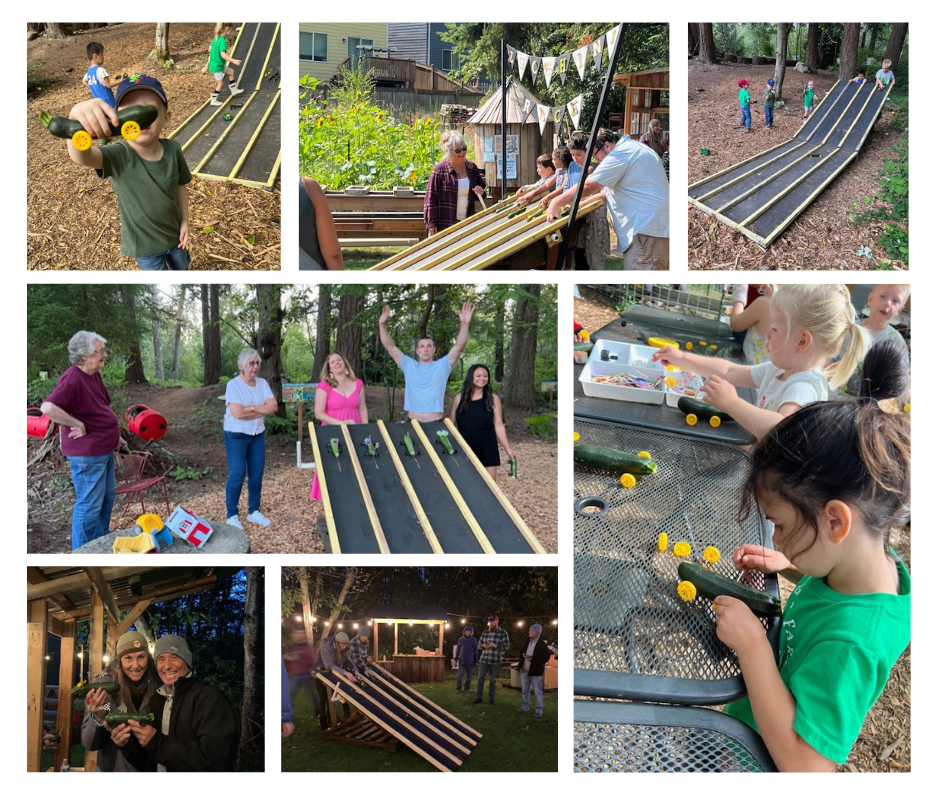
When summer bursts into full bloom at Vaughn’s Teaching Farm and Kitchen in Bremerton, Washington, it’s not just the sunflowers that shine—it’s the zucchinis that steal the show. What started as a playful nod to a hometown county fair has become one of the farm’s most anticipated summer traditions: The Sunflower & Zucchini Festival.
This same spirit of creativity and connection earned Vaughn’s Teaching Farm and Kitchen national recognition, when Rachel Vaughn received the
Agritourism Innovation Award at
NAFDMA’s 2022 Convention & Expo in Georgia. Her imaginative approach to hands-on education continues to inspire farms across the country.
Beauty and Bounty
For farm owner Rachel Vaughn, the idea was simple: celebrate the bounty of summer in a way that’s both beautiful and hands-on.
“There’s so much bounty in the summer to choose from,” Rachel shared. “We landed on both visual beauty and a hands-on play experience—something for everyone!”
The festival’s dual focus on sunflowers and zucchinis perfectly captures what Vaughn’s Teaching Farm stands for—fun, learning, and connection with food.
Zucchini Races: Let the Games Begin!
Rachel’s inspiration came from her childhood on a small island where a zucchini decorating contest evolved into full-blown races. That spark of creativity—and a love for learning through play—found new life on her farm.
Kids begin by heading to the field to harvest their own zucchini, then transform their veggies into personalized racecars with axles, wheels, and decorations. Cupcake toppers are a crowd favorite—flames, flags, and everything in between.
“They can even carve into their zucchini for a more personal touch,” Rachel said. “Then they test, tweak, and race!”
The excitement builds on a custom-built plywood track with four lanes and a suspense-filled starting gate. Each heat narrows the field until a final winner zooms down the ramp—though half the fun is watching racers fall apart mid-race.
“It happens all the time,” Rachel laughed. “Once they eliminate drag, they hit the barricade, do a hop, and flip on their side. The crowd groans every time!”
Medals are awarded to top racers, but most participants are just thrilled to take their racecar home—sometimes keeping it a little too long.
Farm Family & Community Connection
As an urban teaching farm, Vaughn’s Teaching Farm thrives on connection and creativity.
“We’ve found the best way to learn is through play,” Rachel said. “Using a bumper crop makes it easy and fun.”
Parents join in enthusiastically—offering tips, cheering loudly, or building right alongside their kids. The teamwork and laughter create a family memory rooted in joy and discovery.
“Our farm exists to connect people with their food,” she explained. “When they’re hands-on, it creates a positive connection. It even makes introducing things like kale much easier!”
The event’s popularity has grown beyond the summer festival. Families now request zucchini races for birthday parties and corporate events—proof that the joy of playing with your food never goes out of style.
Behind the Scenes
For Rachel, the most rewarding part of hosting the festival is when it feels authentically “farm-born.”
“When an event feels true to who your farm is—and represents the joy and discovery you want to share—it hits the mark.”
Of course, every event has its challenges—like finding enough zucchinis of the right size at the right time.
“I’ve been known to ‘plant’ store-bought zucchinis among my plants,” Rachel confessed. “Only the grandmas notice—and they just give me a sly look and carry on!”
Preparation begins in May, when leftover plant starts fill the fields. Sunflower planting is carefully timed (“we do the sunflower math,” she said), while any overgrown zucchinis get repurposed for the pounding station, where kids use wooden hammers and golf tees to pound into them. The farm even sells zucchini pounding kits so families can continue the fun at home.
One of Rachel’s favorite stories comes from their
farm-to-table dinners, where adults race zucchinis between dinner and dessert.
“They take slow-motion videos, review the footage to see who actually won, and brag about it the next time they visit,” Rachel said. “It’s the best.”
Her advice for other farms looking to start something similar?
“Have your goofiest, most outgoing staff man it. It’s so much more fun with a hype squad. Make it authentic to your farm, and have fun!”
Memories That Stick
For Rachel, the magic moment comes when she sees guests get it—when they dive in with joy and curiosity.
“When they take their fun seriously and jump in enthusiastically, it makes it fun for everyone.”
Her closing thought sums up the festival’s heart: “Don’t be afraid to do something outside the box. If it reflects your farm’s values, you’re on the right track.”
RECENT ARTICLES