
Why Agritourism Travelers Are Looking for Farms Like Yours
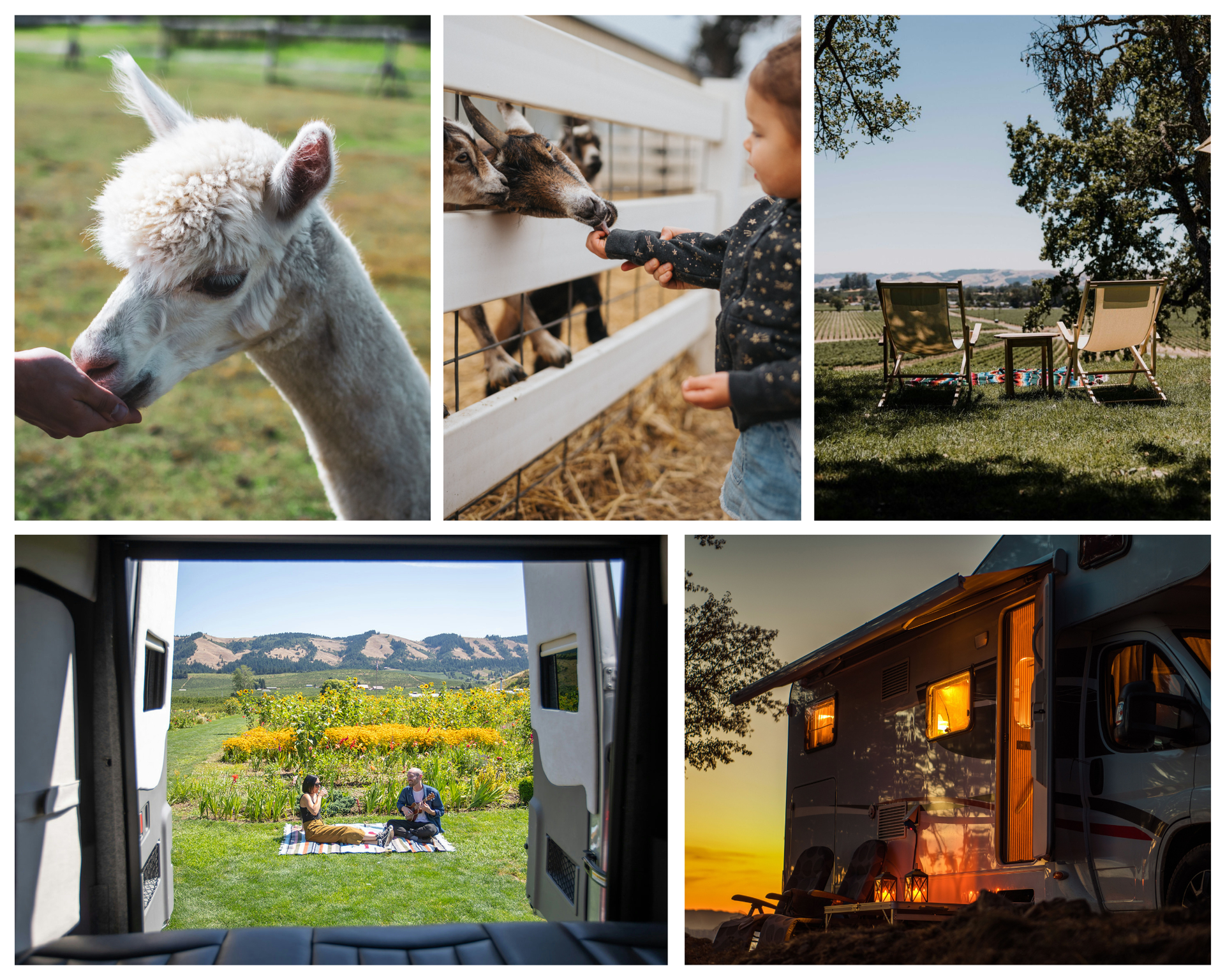
Agritourism has grown from a niche add-on to a genuine draw for travelers — and understanding why can help NAFDMA members make the most of it. Here's what's driving the interest, and a few tips for turning that interest into overnight guests.


Why agritourism resonates right now

Travelers increasingly want experiences over amenities. A night spent on a working farm — surrounded by orchards, vineyards, or pasture instead of a parking lot — offers something a hotel or campground simply can't: a direct connection to where food comes from and the people who grow it. For farms, that shift in demand is an opportunity. Visitors aren't just passing through; they're looking to learn, taste, and engage.


Why this matters to the RV community specifically

RV travelers are natural agritourism guests. They already prioritize slower, more scenic routes over interstate rest stops, and they tend to seek out destinations with character. That's a big part of why Good Sam Overnight Stays exists: it connects RVers with agritourism properties — farms, wineries, breweries — willing to host them overnight. The program is backed by Camping World (largest RV dealer in North America) and reaches Good Sam's 600,000+ Elite Members, all of whom have access to it as part of their membership. For farms, that's a built-in audience of travelers actively seeking exactly what agritourism offers.


Tips for turning interest into visits

       Lead with the experience, not just the stay. RVers remember the farm stand conversation or the sunrise over the vines more than the parking spot itself.

       Make it easy to say yes. Clear information on hookups, access, and hours reduces hesitation for a traveler deciding where to stop.

       Encourage lingering. Longer stays often lead to more time spent exploring the property, shopping the farm stand, or booking a return trip.

       Word of mouth travels fast in the RV community. A great first-time host experience often turns into repeat visits and referrals to fellow travelers.

       Start small. Hosting doesn't require a set schedule — hosts can offer as many or as few nights as make sense for their property.


Getting started

Joining Good Sam Overnight Stays as a host is free, with no reservation minimums and full control over which nights are offered. Good Sam’s team handles the marketing and member support, so hosts can focus on running their farm and delivering the experience travelers are looking for.


For NAFDMA members exploring new ways to bring visitors to the farm, Overnight Stays offers a simple entry point into agritourism's fastest-growing audience: the RV traveler. Join here: https://hostovernightstays.goodsam.com/become-a-host


For any questions, please reach out to Good Sam’s Partnerships Manager Kyle Mackowiak – kyle.mackowiak@campingworld.com


Why Farms Are Signing Up for Good Sam Overnight Stays

RECENT ARTICLES

By Christine Hawks July 24, 2026
Guest Article by Christine Hawks, NAFDMA Membership and Events Manager If you want to challenge your notion of what it means to be alone, visit your library for a copy of Solitude - In Pursuit of a Singular Life in a Crowded World by Michael Harris. And, then earn some bonus points, if you can truly spend several hours alone. Sounds simple enough, right? Agriculture can be isolating and much of the work as agritourism owners and operators, especially during the off-season, might be done alone. But, are you really alone? First, let’s agree on a shared understanding of the states of alone and loneliness. Similar sounding words with very different meanings. Alone is generally accepted to reference a physical state of being by yourself. Whereas loneliness is generally used to describe sadness or feeling disconnected. On our farms, we likely experience both from time to time. And, believe it or not, being alone does have its benefits. Even in the most rural of communities, we’re still connected digitally. Can you recall the last time that you were actually alone for a day - No text messages, no email communication, no cordial greeting with the mail delivery person or your neighbor across the field? I recently tried this challenge and found that it’s more difficult than I could have imagined. I have an elderly mom, so I never feel like I can ignore text messages for a day. I was expecting a delivery of medication for my dog, so I kept checking email because I needed to monitor the tracking schedule. My neighbor came over to chat when she noticed me out mowing the yard. But, as Harris references in his book, we need that alone time, the solitude. And, I’ll take it one step further, we need the mundane in our lives. Two heads can be better than one when focused on an analytical, straightforward problem, but what if you’re trying to coax your next big idea or tackling a complex challenge? Spending time alone and allowing your mind to wander, might just be the solution that you’re looking for. We have ample opportunities to give ourselves this time and space within the routine of our farms. Mucking out stalls? Skip the podcast for an hour and let your mind focus where it will. Mowing the walking paths? Let the hum of the mower lull your mind into a relaxed state. These seemingly mindless chores can allow your thoughts to flow unbound, and you might be pleasantly surprised by what bubbles up when you give your mind the freedom from focus and concentration. I believe I know the only cure, which is to make one’s center of life inside of one’s self, not selfishly or excludingly, but with a kind of unassailable serenity - to decorate one’s inner house so richly that one is content there, glad to welcome anyone who wants to come and stay, but happy all the same when one is inevitably alone. - Edith Wharton, American author
By Suzi Spahr July 15, 2026
Fresh donuts can be one of the most memorable—and profitable—food offerings at an agritourism operation. The aroma draws guests in, encourages impulse purchases, and can turn a simple concession item into a signature farm experience. Start with a Signature Product Before adding multiple flavors and toppings, perfect one high-quality donut your team can produce consistently. Ask: Can every team member make the same product? Can quality be maintained during peak attendance? Are guests receiving a fresh donut every time? Consistency builds guest trust and gives them a reason to return. Let Guests See—and Smell—the Process Agritourism operators have an advantage over traditional retailers: guests can experience the product being made. Whenever possible, make production visible. Watching donuts fry, move through the line, or receive a cinnamon-sugar coating builds anticipation and reinforces freshness. Allow the scent to waft into nearby areas, if possible. The sights and smells are part of the attraction. Design the Program for Busy Days Long lines and slow service can quickly limit sales. Review the entire purchasing process, from ordering to payment and pickup. Consider: Separate ordering and pickup areas Grab-and-go packages Express lines for popular items Additional registers during peak weekends A great product still needs to be easy to purchase. Increase Sales with Bundles Pair donuts with complementary products to increase the average transaction. Popular combinations include: Donuts and cider Donuts and coffee Family-sized take-home packs Donuts and ice cream Seasonal flavor assortments Instead of selling a single item, create a complete farm experience. Create Reasons to Return Keep your signature donut consistent, but introduce limited-time flavors throughout the season. Maple, pumpkin, strawberry, blueberry, caramel apple, and holiday-inspired varieties can generate excitement, repeat visits, and social media content. Limited availability also creates urgency and encourages guests to purchase while the flavor is available. Build Strong Production Systems Document recipes, frying times, coating procedures, packaging standards, and cleaning schedules. Cross-train team members so production does not depend on one employee. Track hourly sales, attendance, weather, and seasonal trends to improve forecasting. Producing in smaller batches throughout the day can help maintain freshness while reducing waste. Make Donuts Part of Your Marketing A signature donut can market your operation long after the guest leaves. Branded packaging, creative toppings, seasonal flavors, and behind-the-scenes videos encourage guests to take photos, share their experience, and introduce your farm to new audiences. Avoid Common Mistakes Operators can strengthen their donut program by avoiding: Too many menu choices at a time Hidden production areas Long wait times Unappealing packaging Overproduction and waste Inconsistent quality  The Bottom Line The strongest donut programs combine quality, consistency, efficient service, and guest experience. When guests can smell the donuts, watch them being made, purchase them easily, and take home a product worth talking about, donuts become more than a menu item. They become part of the memory—and an important revenue opportunity for the operation.
By John Stanley July 15, 2026
Memories Are Made of This: Turning Farm Visits Into Stories That Last There is a reason certain songs, scents, places, and foods can take us right back to another season of life. “Memories Are Made of This,” made famous by Dean Martin in 1955, still brings a sense of nostalgia to many people today. It reminds us that memories are powerful, and for farm visitors, those memories often begin with the simplest moments. A child tasting something fresh from the farm. A grandparent remembering the way things used to be. A family laughing together on a wagon ride. A visitor meeting the farmer and hearing the story behind the food. These are the moments that make agritourism so meaningful. The Power of Nostalgia What we create on our farms should be rooted in memories and nostalgia. Many visitors come because they want to reconnect with something from their past. Others, especially younger generations, are looking for a better understanding of farms, food, and farming life. As an industry, agritourism has done a strong job of creating those memorable experiences while visitors are on the farm. But many farms have an opportunity to take the next step: keeping those memories alive after the visitor has gone home. At our own farm, Chestnut Brae, it took us a few years to realize we were not simply selling sweet chestnuts. We were selling nostalgia. It is common for visitors to begin reminiscing about roasted chestnuts they once enjoyed on a street corner in New York, Paris, Rome, London, or Kuala Lumpur. For us, that became our point of difference. We were not just offering a product. We were offering a memory. That leads to an important question for every agritourism operator: What are the nostalgic experiences on your farm? The Power of Meaningful Experiences As more agritourism destinations continue to grow and evolve, visitors around the world are looking for more than just a day out. They are looking for something meaningful. They want to meet the farmer. They want to understand where their food comes from. They want to feel connected to the land, the people, and the story. They want to take those memories home and share them with family and friends. Farmers have a unique opportunity to turn everyday farm life into memorable visitor experiences. The work that may feel ordinary to us can be extraordinary to someone who has never seen it, tasted it, or understood the story behind it. Our role is to turn agritourism, entertainment, and food into a story visitors can take home with them. Storytelling Keeps the Experience Alive Storytelling is one of the most powerful tools we have in agritourism. Visitors should experience the story while they are on the farm, but the opportunity does not have to end when they leave. At Chestnut Brae , we are partnering with Storylands Atlas , an organization working with farm partners in Canada, the United States, the United Kingdom, and Australia. Visitors can scan a QR code while they are at the farm, which takes them to Storyland Atlas, where their online memory storyboard begins. From there, they can continue engaging with the farm experience through audio stories, collectables, digital adventures, recipes, and keepsakes. The goal is simple: take the real farm experience and extend it into a living story world that families can continue to enjoy at home. Bringing the Farm Story Home The more we can connect visitors to the story of our farms, the more likely they are to remember us, return to us, and share our story with others. Agritourism is not just about what visitors do while they are on the farm. It is also about what they remember when they leave. The sights, sounds, smells, tastes, and stories all become part of the experience. Those memories can continue to build loyalty, connection, and excitement long after the visit is over. The Agritourism Training Academy provides tools to help farms develop meaningful, nostalgic experiences for their visitors. To learn more, click the Agritourism Training Academy’s name above.