
Rooted in the Land: Why Sharing Your Farm’s Story Matters
Across agritourism, farms are discovering that one of the most powerful experiences they can offer guests isn’t just pumpkins, corn mazes, or fall treats — it’s story.
The story of how a farm began.
The generations who worked the land.
The traditions that shaped what visitors experience today.
When guests understand the why behind a farm, their visit becomes more than entertainment — it becomes connection.
To explore why sharing farm history matters, we spoke with Robby Rutledge of Rutledge Family Farm. In 2025, the farm celebrated 25 years of corn mazes with a design that honored the generations who helped build the farm’s legacy.
A Farm Story That Began Generations Ago
The Rutledge family’s roots in the Olympia area stretch all the way back to the 1850s, when the family first settled and began farming in the region. The modern operation began when Robby’s grandfather worked as the foreman of the cellars at the Olympia Brewery. Looking for extra income, he began raising beef cattle on the side, feeding them grain from the brewery along with corn.
Eventually, he realized sweet corn could be more profitable than raising cattle. So he made a shift that would shape the future of the farm — transitioning to growing sweet corn, a crop he continued producing for the next 30 years.
Then a new idea began appearing across agriculture.
Corn mazes.
In 2000, while attending a farm conference, Robby’s grandfather picked up flyers from maze design companies. Robby’s uncle saw them and encouraged him to give it a try. That same year, working with MazePlay, Rutledge Family Farm carved its very first corn maze. It was the beginning of what would become a defining tradition for the farm.
Building the Experiences Guests Enjoy Today
The farm visitors see today didn’t happen overnight.
Robby shared that both his grandfather and uncle played key roles in shaping the experiences guests now enjoy.
“They worked very hard to create the farm we have today,” he explained. From creating the haunted maze to building gathering spaces like the gazebo with a fire pit — still used by guests today — their vision helped turn the farm into a place where families could gather and create lasting memories.
Their values also continue guiding the farm today.
“We are still very much a corn farm,” Robby said. “I don’t know if we will ever stop doing that. It’s part of who we are and what we are known for.”
He also remembers one philosophy that still shapes how the farm is cared for.
“My uncle always said, ‘If it don’t grow, it’s got to go.’”
That mindset continues to guide how the farm is maintained today.
Honoring 25 Years of the Corn Maze
In 2025, the farm reached a major milestone: 25 years of corn mazes.
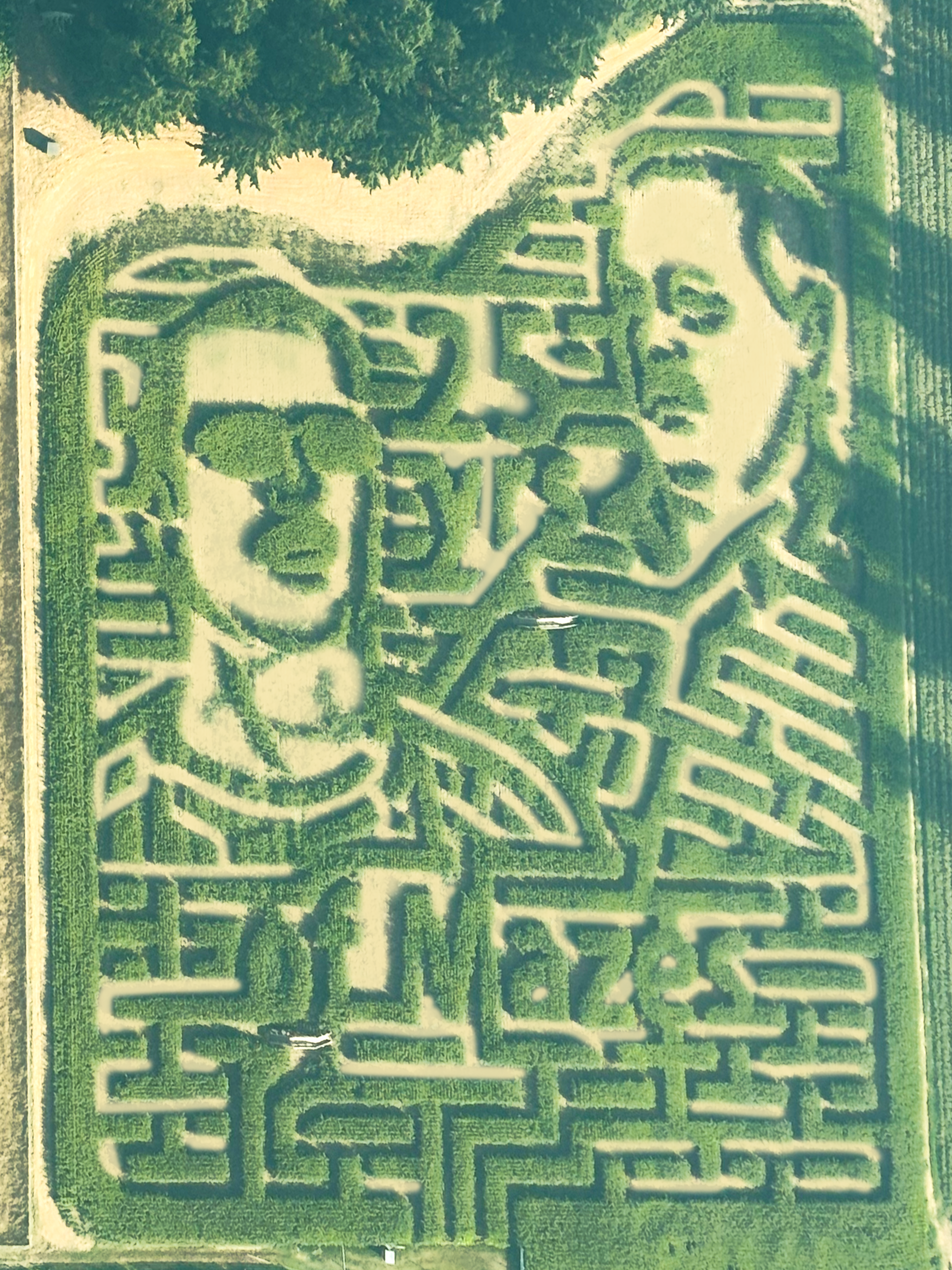
To celebrate, Robby designed a maze that honored the two people who made it possible — his grandfather and uncle.
Their faces were carved directly into the maze design. “They probably would have never wanted their faces in the maze,” Robby said. “But we couldn’t celebrate 25 years without honoring them.”
The design was kept completely secret — even from family members. Only the maze designers knew what it would look like.
Robby planned a special unveiling during the farm’s anniversary celebration.
When guests and family members saw the maze for the first time, emotions ran high. “Many people were very surprised,” he shared. “I even got a few tears from my cousin when she saw her dad in the maze.”
Moments like that remind us that farms are more than businesses — they are family legacies.
From a Simple Maze to a Full Farm Experience
The first corn maze season looked very different from what visitors see today.
Back then, the farm had very little infrastructure.
“We had a corn maze and a haunted maze. That was it for activities,” Robby said.
An old corn stand building served as the farm’s first concession stand, where guests could buy cocoa, apple cider, soda, chips, and candy bars.
Today, like many agritourism farms, Rutledge Family Farm offers many more attractions and experiences, creating a full fall outing for families. But those early seasons remain an important part of the farm’s story.
Why Farm History Helps Guests Connect
When guests first saw the anniversary maze, many didn’t immediately know who the faces represented. But once the story was shared, something changed. Visitors became more engaged and interested in the farm’s history.
“I think it’s important to share our history with guests,” Robby explained. “We’re not just a business in the community — we are a working farm.”
Agritourism farms grow food, care for the land, and create places where families return year after year to make memories.
Sharing that story helps visitors understand the deeper purpose behind the experience.
How Farms Share Their Stories
At Rutledge Family Farm, storytelling often happens in simple ways.
Two of the most common ways they share their story are:
• Conversations with guests while they visit the farm
• Social media posts that highlight the farm’s history and traditions
These everyday interactions help visitors better understand the farm and the people behind it.
Why Storytelling Matters for Agritourism
Storytelling has become an essential part of agritourism.
Across agriculture, many farms face economic challenges. Agritourism helps generate additional income that allows farms to continue operating.
At the same time, many people today are disconnected from where their food comes from. Agritourism bridges that gap.
“Many people don’t even know where their food comes from,” Robby said. “Agritourism farms help show what farmers go through and how people can connect with them.”
When farms share their stories, they invite guests to become part of that connection.
Continuing the Legacy
For Robby, continuing the legacy started by earlier generations carries deep meaning. Generational farms create a connection to the land that runs far deeper than business.
“Memories are made, traditions are passed down, and you learn from the previous generation,” he said.
Working the same land that family members worked before you — sweating and sometimes even bleeding on it — creates a bond that is difficult to replicate anywhere else.
Looking ahead, Robby is excited about continuing to grow the farm and improve the experience for future visitors.
“The chance to continue to grow and improve the farm — whatever it looks like today, tomorrow we can make it even better.”
Advice for Farms Preserving Their Story
When it comes to protecting farm legacies, Robby offered one important piece of advice for other farms.
Start planning now.
Succession planning can be difficult, but delaying those conversations can create unnecessary challenges for families.
“If you want your farm to continue, do it now,” he said. “Don’t wait.”
By preserving their stories and planning for the future, farms can ensure their legacy continues for generations to come.
Every farm has a story worth telling.
Whether it’s carved into a corn maze, shared in a conversation with guests, or passed down from generation to generation, those stories help visitors understand the heart behind the farm.
And often, that story is what keeps them coming back year after year.
RECENT ARTICLES