Stronger Together: Why Showing Up to NAFDMA Changes More Than Your Farm

What if the biggest return on investment you’ll ever see isn’t a new attraction, a better marketing plan, or even higher attendance…What if it’s the people?
Because this life we’ve chosen — agritourism, and inviting the public onto our land — is beautiful and demanding in equal measure. It’s early mornings and late nights. It’s risk and reward. It’s weather reports, staffing puzzles, insurance questions, and the constant hum of “What’s next?”


It is deeply fulfilling.
And sometimes, deeply isolating.

That’s why NAFDMA is more than a membership. It’s a gathering place for people who understand that tension — the grit and the glory — because they’re living it too.


Membership Is More Than a Benefit List

It’s easy to think of membership as access: roundtables, webinars, directories, discounts. And yes, those tools matter. They are practical. Strategic. Helpful.


But what makes NAFDMA different is what happens inside those spaces.

It’s the moment you log into a webinar or join a roundtable and realize the question you’ve been carrying quietly is one five other farms are asking too.


It’s the Facebook thread that turns into shared spreadsheets, signage ideas, or honest conversations about what didn’t work.

It’s knowing that when you say, “We’re trying to figure this out,” someone responds with, “We’ve been there.”


Membership gives you resources while giving you reassurance. And that changes how you lead.


Convention: Where Conversations Turn Into Catalysts

If membership is connection online, Convention is connection in motion.


There is something powerful about standing in a room full of people who understand why you care about parking flow, ticket timing, crop diversification, and guest experience details.


At Convention, the learning is strong — the speakers, the EXPO floor, the education sessions. But the magic often happens in the margins. The breakfast table conversation that sparks a new pricing idea.  The hallway exchange that reshapes your marketing plan.
The farm tour insight that becomes next season’s attraction. You arrive for education and you leave with relationships.

And those relationships are not surface-level networking. They are the kind that turn into late-season texts, shared policies, and “Can I run this by you?” phone calls months later.


AFT: Learning With Your Boots On

Agritourism Farm Tours take connection one step further.


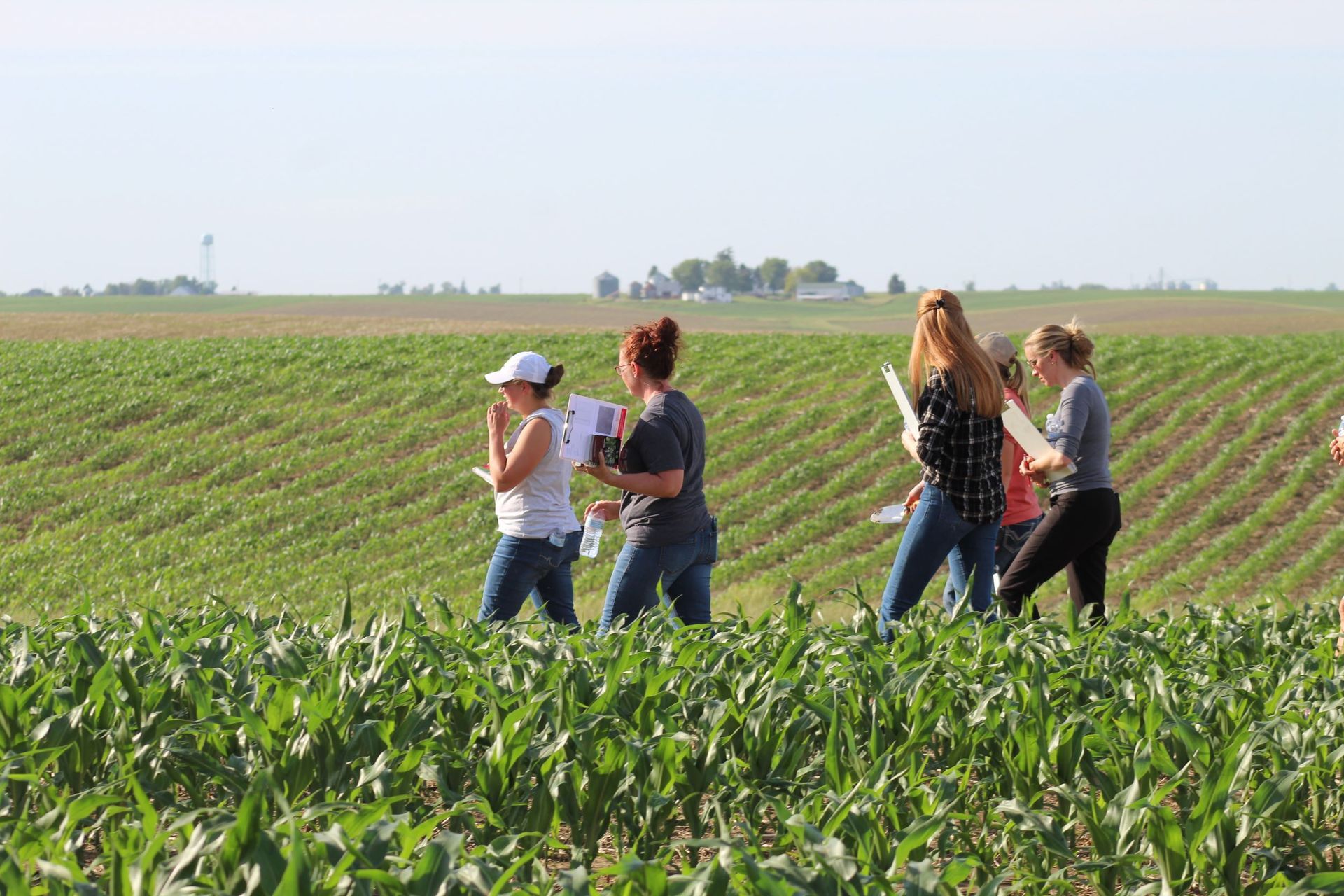
You aren’t just hearing about another operation — you’re walking through it. Seeing the signage. Watching guest flow. Asking real-time questions while standing in the middle of the action. There’s something about traveling together, riding a bus, eating meals side by side, and exploring farms as a group that accelerates trust.


You go from What farm are you from?” to “Let’s stay in touch.” — and this time, you truly mean it. Because when you’ve walked someone’s fields and seen their operation up close, you’ve also witnessed their heart for this industry.


ALT: Growing the Leader Behind the Farm

NAFDMA’s Agritourism Learning Retreat (ALR) isn’t a sit-in-your-chair-and-take-notes kind of experience.


It’s boots on gravel. Clipboards in barns. Real conversations beside real cash registers.


This multi-day intensive connects you with some of North America’s premier agritourism operations — not from a distance, but up close. You step out of the classroom and onto the farm itself, walking the paths guests walk, standing where decisions get made, asking the questions you don’t always get to ask.


Typically spanning two full days, host farms open their books and their stories. They share their history, their management structure, their protocols, operations, marketing strategies, finances — the wins, the pivots, and the “we learned this the hard way” moments in between.


ALR is immersive. It’s hands-on. It’s honest.


Because growth doesn’t just happen when someone tells you what worked.
It happens when you see it.
When you feel it.
When you stand in the middle of it and think, “We could do this… but in our own way.”


And suddenly, you’re not just running a farm.


You’re refining a vision.


Why Showing Up Matters

You can be a member and stay on the sidelines. You can try to solve every challenge internally. You can operate in survival mode year after year. Or you can lean in and......you can show up to the roundtable.  Register for the tour. Book the Convention flight. You can invest in the relationships that strengthen your operation long after the event ends. Because the strongest farms aren’t the ones that do everything alone. They’re the ones that build community around their courage.


When staffing feels overwhelming. When weather disrupts your plans. When you’re evaluating risk, growth, or change. It helps to have someone who understands — not theoretically, but practically.


That is what NAFDMA offers.

Not just education.  Not just events. Belonging. And belonging fuels resilience.  Resilience fuels innovation.  Innovation fuels growth. So if you’ve been wondering whether to lean in more — to utilize your membership, to attend that event, to start that conversation — consider this your invitation!


Your farm doesn’t just grow crops.  It grows impact.

And when we grow together, we grow stronger!

RECENT ARTICLES
By John Stanley • November 20, 2026
In 2008, I wrote that the Information Era was coming to an end as a point of difference. At the time, that probably sounded like a bold statement. We had watched the rapid rise of personal computers, mobile phones, Google, YouTube, Facebook and an internet that suddenly placed an extraordinary amount of information at our fingertips. By 2009, information itself was becoming increasingly easy to access. My argument then was simple: if everyone can access information, information alone can no longer be your point of difference. Your point of difference becomes trust. Nearly twenty years later, that idea is even more important. We Have Moved Beyond Information Overload In 2026 we don't have a shortage of information. We have too much of it. Our customers can search for a farm, attraction, restaurant, product or experience within seconds. They can read reviews, watch videos, compare prices, look at photographs, ask artificial intelligence for recommendations and see what strangers on social media think before they ever arrive at our front gate. But there is another challenge. People are increasingly questioning whether what they see is actually real. Photographs can and are enhanced. Reviews can and are manipulated. Content can be generated by AI. Businesses can create polished marketing campaigns that look impressive but don't necessarily reflect the experience customers receive when they arrive. We have entered an era where information is everywhere, but trusted information is increasingly rare and valuable. For agritourism, that creates an enormous opportunity. Agritourism Has Something People Are Looking For: Authenticity One of the great advantages of agritourism is its authenticity. There is a real farmer. A real farm. Real soil. Real animals. Real crops. Real food. And, most importantly, real people with a story to tell. As our lives become increasingly digital, automated and artificial, these genuine human experiences become more valuable. But simply being authentic isn't enough. We also need to demonstrate that authenticity and build trust around it. A customer needs to feel confident that the experience they see online will be the experience they receive when they arrive. If your website says you are open, be open. If your photographs show overflowing produce displays, make sure customers don't arrive to empty shelves. If you promote an opportunity to meet the farmer, make sure someone is available to tell the story. If you talk about local produce, explain what "local" actually means. If something changes because of weather, crop availability, staffing or circumstances beyond your control, communicate it honestly. Trust is built when what we promise and what we deliver are the same thing. Your People Are Part of Your Trust Strategy Trust isn't created by a marketing department. It is created throughout the entire customer journey. It might begin with a social media post or Google search, but it continues with the booking process, signage, car park, toilets, farm shop, staff, food, activities and conversations. Every interaction either builds trust or weakens it, and sometimes the smallest interactions matter most. A staff member saying: "I'm not sure, but I'll find out for you." can build more trust than somebody confidently giving the wrong answer. Customers don't expect businesses to be perfect. They do expect businesses to be honest. The Value Equation Has Changed Too In 2008 I also wrote about the importance of value, especially during challenging economic conditions. That lesson is just as relevant today. Businesses often think value means price. It doesn't. Customers judge value based on the complete experience. Price is part of it, but so are quality, service, range, atmosphere, convenience, cleanliness, education, entertainment, connection and the feeling customers take home with them. In agritourism, value can also come from something that is difficult to put a price on. A child picking their first strawberry. A family meeting the person who grew their food. Learning how cheese, cider or maple syrup is made. Sitting together around a fire. Walking through an orchard. Hearing the history of a farm that has been in the same family for generations. Those experiences create value and when economic conditions become tighter, customers don't necessarily stop spending. They become more selective about where they spend and whether the experience is worth it. That makes trust and value closely connected. If customers trust your business, understand what you offer and believe the experience will be worthwhile, they are far more comfortable making the decision to visit and spend. The New Trust Test Take a fresh look at your business from your customer's perspective. Ask yourself: Does our marketing accurately represent what customers will experience? Are our prices, opening hours and booking information clear and current? Do customers understand where our products come from? Do our team members know our story and how to tell it? Do we explain honestly when something isn't grown or produced by us? Are we delivering the level of service our marketing promises? Does our online reputation match the experience we believe we provide? Are we making it easy for customers to trust us? Most importantly, ask: If I knew nothing about this business, what would make me believe them? Trust May Be Our Greatest Competitive Advantage Technology will continue to change. Artificial intelligence will become more sophisticated. Marketing will become more automated. Customers will have access to even more information, comparisons and recommendations.  But that doesn't reduce the importance of human connection. It increases it. Agritourism businesses have an opportunity few other industries possess. We can introduce customers to the people behind their food. We can show them where things come from. We can allow them to experience something rather than simply read about it. We can tell genuine stories. We can create memories. And we can build relationships. Almost twenty years ago, I suggested that we were entering the Trust Age. Today, I would go one step further. In a world where almost anyone can create information, images, content and claims at the touch of a button, trust may become one of the most valuable things your business owns. Protect it. Build it. And make it part of your point of difference. For more ideas to build and grow your agritourism destination, join the Agritourism Training Academy. There you will find short few minute lessons on various aspects of agritourism and building your agritourism business, with over 300 videos available, you can work on one focus point at a time… in your own time. Visit www.agritourismtrainingacademy.com and get instant access to our Complete Agritourism Training Programme.
By John Stanley • November 20, 2026
It is time to buy your gifts for friends and family for Christmas 2026. â € You pour yourself a coffee, sit on the sofa and start shopping. Will you use the traditional online shopping you used in 2025? No. Will you take a tour of the local mall or shopping center looking for gifts? No. â € You will sit with your smartphone and switch on your personal shopping assistant. Or it may automatically appear there. â € Your assistant knows you and what you like, and what you do not like; it will provide: Product Recommendations and suggestions based on your personal needs and preferences. Answers to your Questions typed in everyday language. Price Comparison: What prices are being offered by local retailers, and do a price check. Feature Comparison: comparing options side-by-side to find the best value. It will also provide information on where you can buy these selected items. Source Comparison: taking into consideration prior purchases and new opportunities for you to consider from local companies, chain stores, and whether you will pick up your purchase at the retailer or have it shipped to your door. â € All while you enjoy your home-brewed coffee. â € What are the Benefits? There are a lot of products out there, and shopping is becoming more and more confusing. Your Assistant knows you and can narrow down choices based on your preferences and do it really fast. Plus, it can do it when you want it to. It works 24 hours a day, seven days a week. You can shop when you want to shop. â € Looking beyond Christmas gifts, it ensures you don’t forget important occasions, as your Shopping Assistant will prompt you with a reminder. â € You may think this is futuristic, and you will have time to adjust, but Walmart shoppers already have Sparky available to them, and other shopping assistants such as Perplexity, Shop, and Alexa are already on the market. â € This may be convenient to shoppers, but what about “brick-and-mortar” farmers markets? â € First, we have to accept that this new way of shopping will change some shopping habits. â € Potential shoppers can do an instant price check while still at home and then can carry out a filtering of those items. They can then select home delivery and may buy from you without making any contact with your store. A majority of consumers use Google or Safari (which is powered by Google). Most retailers receive phone calls from Google’s shopping assistant. What we must understand is where Google is going. Google’s AI-powered shopping assistant, heavily anchored by Gemini, transforms a passive search engine into an active, conversational personal shopper. In AI Mode on Google Search, it acts as an end-to-end "agentic" commerce platform, going well beyond standard keyword searches. â € This does not have to be the end of brick-and-mortar retailers; while some disappear, others will look at the opportunities. â € Physical Store Survival Grab and Go will still be a desired option for some customers, and this means we need to visually merchandise products. â € A key to success will be your training program. Team members must be Day Makers, and they must have an in-depth knowledge of the products on offer and be able to communicate the information to customers in a way that provides confidence and trust. â € Customers will come to the market if they are getting an experience. This may mean you need to dedicate space for in-store experiences. This space may be used for workshops, classes, club meetings, and live demonstrations. â € Examine the customer journey and know where to set up locations where customers can use their senses; going beyond visual to include smell, touch, and taste. â € At the same time, you also need to be present on the Shopping Assistant. This should include promoting your product range, helping to identify what makes your store unique, your Onliness, as well as providing instant service. â € What is certain is that shopping assistants are already appearing on many customers' mobile phones, and you need to get there before others gain their trust, their business, and their loyalty. â € The Agritourism Training Academy includes short few minute lessons on onliness, building displays, and customer experience, as well as over 300 other lessons to help operators and farmers diversify their income to grow an experience destination. Visit www.agritourismtrainingacademy.com to find out more or get instant access to the program.
By angie • October 26, 2026
Agritourism insurance is not farm insurance—and it’s not standard general liability. It’s a very specific space that blends both, covering everything from wagon rides and mega slides to safaris and seasonal attractions. Safety Compliance Is Not Optional Tip: Safety compliance is not optional—and it’s not something you set and forget. ASTM standards, ride inspections, signage, staff training…these things matter. Not just for checking a box, but because they directly impact claims, defensibility, and your livelihood. The operators who are intentional about safety—and can show it—are the ones who put themselves in the best position when something goes wrong. A Different Approach to Agritourism In this short video, I share how we approach agritourism differently. We don’t just look at policies—we get involved in how you are operating, how your attractions are set up, and how you are protecting your guests. Because at the end of the day, this isn’t just about insurance—it’s about your business, your people, and the experience you’re creating. 👉 Watch the video At Risk Services – Leavitt Insurance Agencies, we’re proud to serve this industry and the operators who care deeply about doing things the right way—and we’re here to be a long-term partner as your operation grows, evolves, and continues to raise the bar. 👉 Connect with Kim Ayers