
The Importance of Inclusive Play – A real life perspective
Creating the design for the Cove Playground at the National Maritime Museum was a different experience for us. We are no strangers to inclusive play with Windsor, Boundless and Blenheim under our belt already.
In this project, we were given the opportunity to work with some local stakeholders to fully understand what would make a new adventure play area properly accessible.
By the time the design was finished, we had spent more than 100 hours in consultation with over 200 individual stakeholders from local SEND schools and groups, to help design the play they had always dreamed of being able to enjoy.
The stakeholder engagement touched every part of the design on the micro and macro scale. Wide design themes such as number, characteristics and location of access points to site, right down to the smallest finishing touches. We baked their thinking into the fabric of the playground from the get go, making the SEN features coherent and part of the narrative of the play, rather than adding it as a second thought.
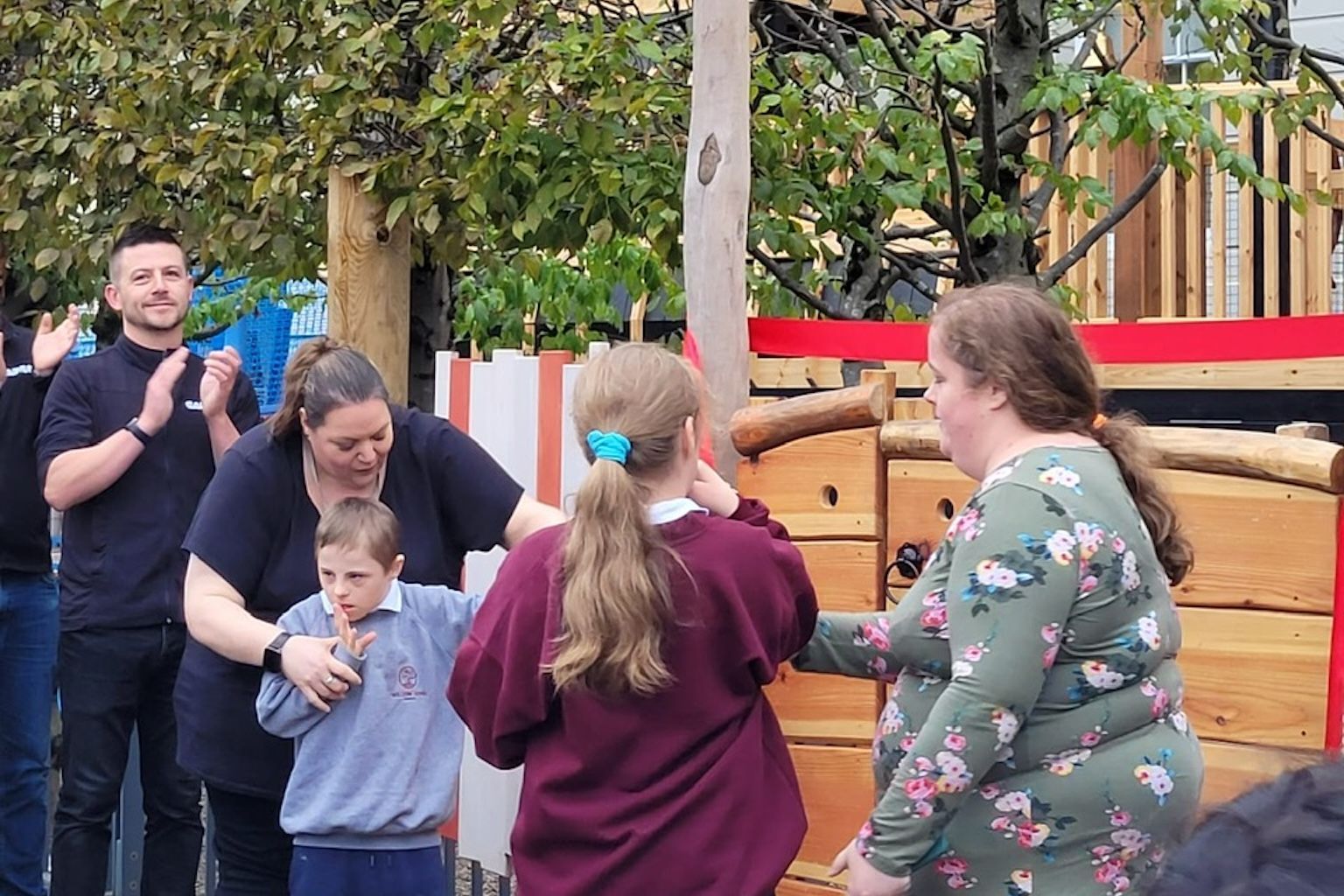
At the recent opening event, some of the children from Willow Dene School were tasked with cutting the ribbon to declare the play open, as a thank you for their invaluable input.
There were speeches too, but the one that stood out was by Lisa Parascandolo from Willow Dene, which we reprint here in full.
"Willow Dene school is a special needs school with students ranging from 2-19, with cohorts of children and young people with complex needs and autism. We are so used to being unseen. Or if we are seen, it is in a “less than” capacity. That our children and young people do not have opinions or cannot express what they want or need.
To be included in this whole process, not just as a tick box exercise, add an accessible swing here, an inclusive roundabout there…an afterthought, but to be asked what we wanted, what would we like to have in a play space, how do our children play. It was truly remarkable.
We often do not get to talk about our children in this way, for the families, children and staff to openly discuss what we need to help assist with play. We were able to raise wanting to use all our senses within play, to be able to discover our vestibular sense and develop our proprioceptive sense.
And the wonderful experience of being heard. We discussed the wheelchair accessible ramp having ‘passing places’ and the architects getting to understand why that was important and then putting that into the design.
When the only people that usually take the time to understand what you need are your family and your teachers, it’s almost a euphoric experience to have these conversations.
I was fortunate to have a walk around the site yesterday and it is truly amazing to see something come to life from all the drawings and concepts we have been involved with.
Initially for our families, it was that feeling of being included and not as an afterthought. For them to talk about their child and to feel heard. To discuss how important it is to have inclusive and accessible play spaces.
Families come in all shapes and sizes. Being part of a disabled family and being able to take the whole family to one play space and interact with others is quite remarkable, as it is not able to happen very often. With this play space, our families can feel like part of the community, meet up with friends and feel a sense of belonging.
A short walk from the play space is the museum café. There is also a changing places hygiene unit with a hoist, which any parent of a child who uses a wheelchair will tell you, is absolutely essential in planning any day out.
We can fight prejudices about disability by being out in the community and by being seen. Though we might look and sound different we are still children, who love to play. And now they have a place in our community that they helped create and it is beautiful."
Lisa Parascandolo
Physical Development and MOVE Lead
Cultural Capital Lead
Willow Dene School
Sarah Lockwood, Head of Engagement at Royal Museums Greenwich initiated the consultation process and we worked with Ruth Boley, Senior Manager; Learning, Ros Croker-Ahmed, Senior Manager; Partnerships and Engagement and Katie Cassel; Families and Young People Manager to engage and facilitate working with stakeholders, which for us delivered incredible results we can all be proud of.
Speaking about it, Sarah said - "At Royal Museums Greenwich we take play seriously and wanted the opportunity of creating a new outdoor play space, at the National Maritime Museum, to support every child’s right to play. Working collaboratively is at the heart of what we do, and we thank CAP.Co for undertaking the journey of consultation with our stakeholders, listening and responding to their needs, to make a truly unique and memorable space for children and their families."
Lisa's speech at the opening of the Cove was the most incredibly moving speech for all of our team. What we learned during the process of co-creating the design will change the way we work on every project we look at going forwards.
We have always believed that play is better together. In fact it's only really fun if you're playing and interacting with others. Working with a client as forward-thinking as Royal Museums Greenwich enabled this process to be genuinely useful and between us, we have created something amazing.
Inclusive play is incredible. Children don't see disabilities, they see that we have created the ability to play together with everyone, whatever their ability. To be truly inclusive, everyone must come away with the same play experience, which means a playground should offer a level of challenge to ALL abilities including SEN users.
The full list of Royal Museums Greenwich stakeholders who were consulted to create the play at the National Maritime Museum is as follows:
- Action For Refugees Lewisham
- Museum Participants/Groups: Discover Sundays, LGBTQ+ Family Forum, Play Outdoors, SENsory Sailors
- Primary Schools: Halstow, James Wolfe, Mulgrave, Meridian, Myatt Garden
- The Anchor SEND friendly Center and Willow Dene Special School
And Thank you to Lucy MacDonald who supported the consultation process across the groups.
Royal Museums Greenwich have created a Play Manifesto to reinforce the commitment to actively supporting play. You can see that here.
RECENT ARTICLES