
A Blooming Summer: Behind the Magic of FestiFleurs
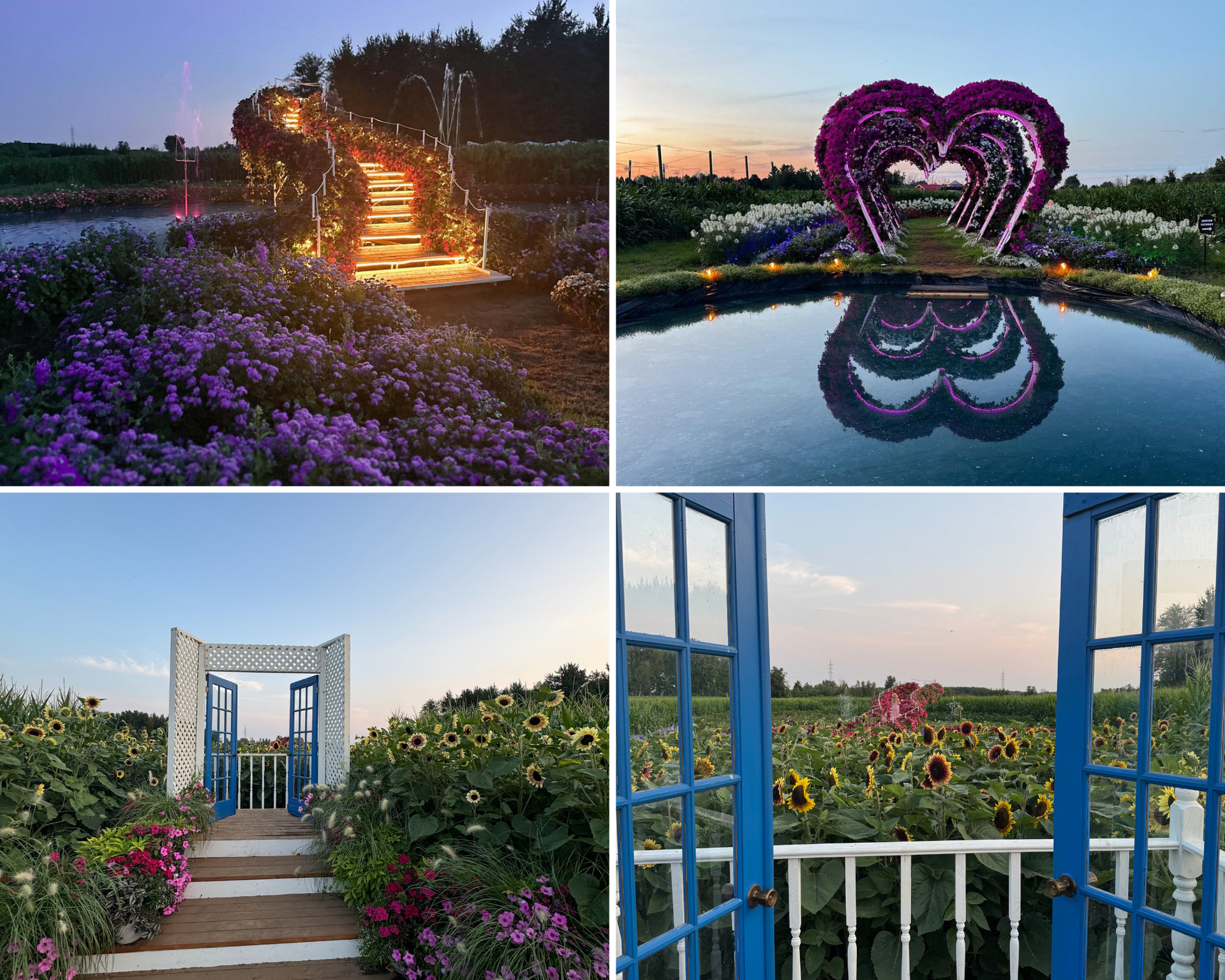
If you think sunflowers are the ultimate summer flower, you might want to think again. FestiFleurs at La Belle de Coteau-du-Lac is flipping the script—and the field—with more than 200 varieties of stunning blooms, creative photo ops, and immersive flower experiences that go far beyond your typical upick. We sat down with the visionary behind the festival, Marc-André Isabelle, to hear how this blooming dream came to life at La Belle de Coteau-du-Lac.
What inspired the creation of FestiFleurs, and how has it evolved over the years?
FestiFleurs started blooming in my brain after our 2020 sunflower festival. The flower picking frenzy got so wild, people were parading through town with their bouquets on the way to restaurants! That year also showed me just how risky it is to count on perfect weather for just three weekends—especially when it made up a big chunk of our income.
So the wheels started turning. I imagined something longer-lasting, with more variety, and that same joy of picking flowers. The first spark? Those bold, colorful bands of tulips in the Netherlands—but with annuals that bloom in July and August.
After year one, attendance wasn’t quite sunflower-level, but the people who came? They really picked flowers—and that showed me the potential. Over the next few years, I leaned into creative photo ops: the big swing, the staircase, and then the hearts!
Fun fact: the staircase idea came from the glamour of red carpets—Oscar night, Cannes, the Met Gala. Why not La Belle? But I didn’t want a boring square staircase. I wanted curves. Flow. Intrigue. Then my girlfriend showed me a floral heart arch... and I said, “Yup. I can make that.” Turns out, that photo was from the Dubai Miracle Garden. Let’s just say… different budget!
Still, even with some flower growing struggles, we pulled off 3.5 out of 5 hearts in 2024, and it was a massive hit—attendance jumped 50%. The remnants of Hurricane Debbie even gave me the idea for 2025’s inspiration. I get a lot of ideas from the world around me… and then twist them a little to make them my own.
With over 200 varieties of flowers, how do you decide which blooms to showcase each year?
For the upick area, I focus on giving guests a wide variety—colors, shapes, textures. I pay close attention to what people love picking and tweak the selection each season.
When it comes to the photo scenes, though, flower choices are all about design strategy:
- I fill space completely—no blank spots.
- I layer heights, using shorter plants near people and taller ones in the background.
- I define the edges of the scene clearly.
- I vary backdrops: tall sunflowers, corn, climbers, you name it.
- And for intense color coverage—especially for something like the hearts—petunias are unbeatable.
What sets FestiFleurs apart from other floral festivals or summer events?
I design each scenic photo space from the ground up, not just toss props into whatever flower patch looks good. Take 2024’s "piano alley" as an example: Three pianos, three distinct vibes.
- One was wild and prairie-inspired—rudbeckia, gomphrenas, ornamental grass.
- Another was romantic, with dreamy pink blooms and a landscape backdrop.
- The last was a baby grand floating in a sea of blue and white, cloudlike flowers.
Because we use annuals, I can redesign the entire scene each year with completely different blooms. It keeps things fresh—and way more exciting than a sunflower-only field.
What do you hope visitors feel or take away after attending FestiFleurs?
One comment from the early days still sticks with me:
“We sit in the flowers and feel like we’re on vacation.”
That’s the goal. A peaceful pause. An escape. People walk through the festival, discovering it piece by piece. Sometimes they even lose track of where they are. Even our own staff sees it fully for the first time once it’s all in bloom—it’s that transformative.
How did the Sunset and Bonfire evenings come about, and why are they so loved?
Sunset lighting = magic. The skies, the softer glow—it all makes for better pictures. Add in music, bonfires, and now this year… we finally got our alcohol license! That festive vibe really brought in a new crowd.
We also added tons of lights to the photo scenes, thanks to a grant. It transforms the flower field as the sun goes down, making it feel almost like a dream. The photo ops during that transition? Absolutely stunning.
What are some of your favorite photo spots or hidden gems?
This year? The hearts—no question. What started as 3.5/5 in bloom became a full 7/5. Unreal.
Close second? The stairway. I added more flowers this year and the curves pop. Bonus: the fountain beside it makes for an awesome backdrop.
Hidden gem? There’s a tucked-away mini stairway with a French door balcony overlooking a patch of sunflowers, the main stairway, and the pond. Pure magic.
Do you have any special moments or stories from past festivals that have stayed with you?
Honestly, it’s the little experiments that end up becoming big wins. Like growing flowers in raspberry fertigation substrate bags and seeing how lush they got for photo scenes. Now we’ve got an underground system to distribute that raspberry “juice”—it’s flower fuel!
Or the first pond I made—just a sump pump and plastic tubing—but people loved it! That’s when I realized: people love water in their photos. Hurricane Debbie flooded our field one year and the reflections were so stunning, it inspired me to build a real pond in front of the hearts for 2025.
What’s one tip you'd give to first-time visitors?
Forget the clock. Seriously.
One guest said:
"I'll swing by quickly to check it out."
Three hours later… they were on their knees between rows, chasing the perfect shot.
If you love flowers, flower photos, or just strolling with no agenda—this is your kind of place. Warning: You may leave with a sudden urge to garden… or change your phone wallpaper.
Anything else you'd like people to know?
People always say, “Wow, this is way more than I expected.” We try to show it all in pictures, videos, reels, drone shots—even bring in influencers—but still, folks are blown away. That’s a good thing (under-promise, over-deliver), but if anyone has tips for how we can better capture the feeling of FestiFleurs in our marketing, I’m all ears.
And to those who are curious—don’t be afraid to step outside the sunflower box. Flowers are deeply satisfying. It’s taken a lot of dedication, teamwork, and perseverance to grow FestiFleurs to what it is today. But in the last two seasons, we’ve really started to see the seeds we planted take root. This might just be the year we outpace sunflower attendance—and I’m ready for it.
RECENT ARTICLES