
Planting for Tomorrow: Pots of Tulips, Pops of Color

Adding Pops of Color to Your Spring Festival
Great ideas from our Industry Partner, Ruigrok Flower Bulbs!
Fall is the perfect time to think about spring! While the tractors are rolling and you’re busy planting tulip bulbs this November, here’s a small idea that can make a big impact at your next spring festival: 
set a few bulbs aside for pots and containers.


Why Pots?

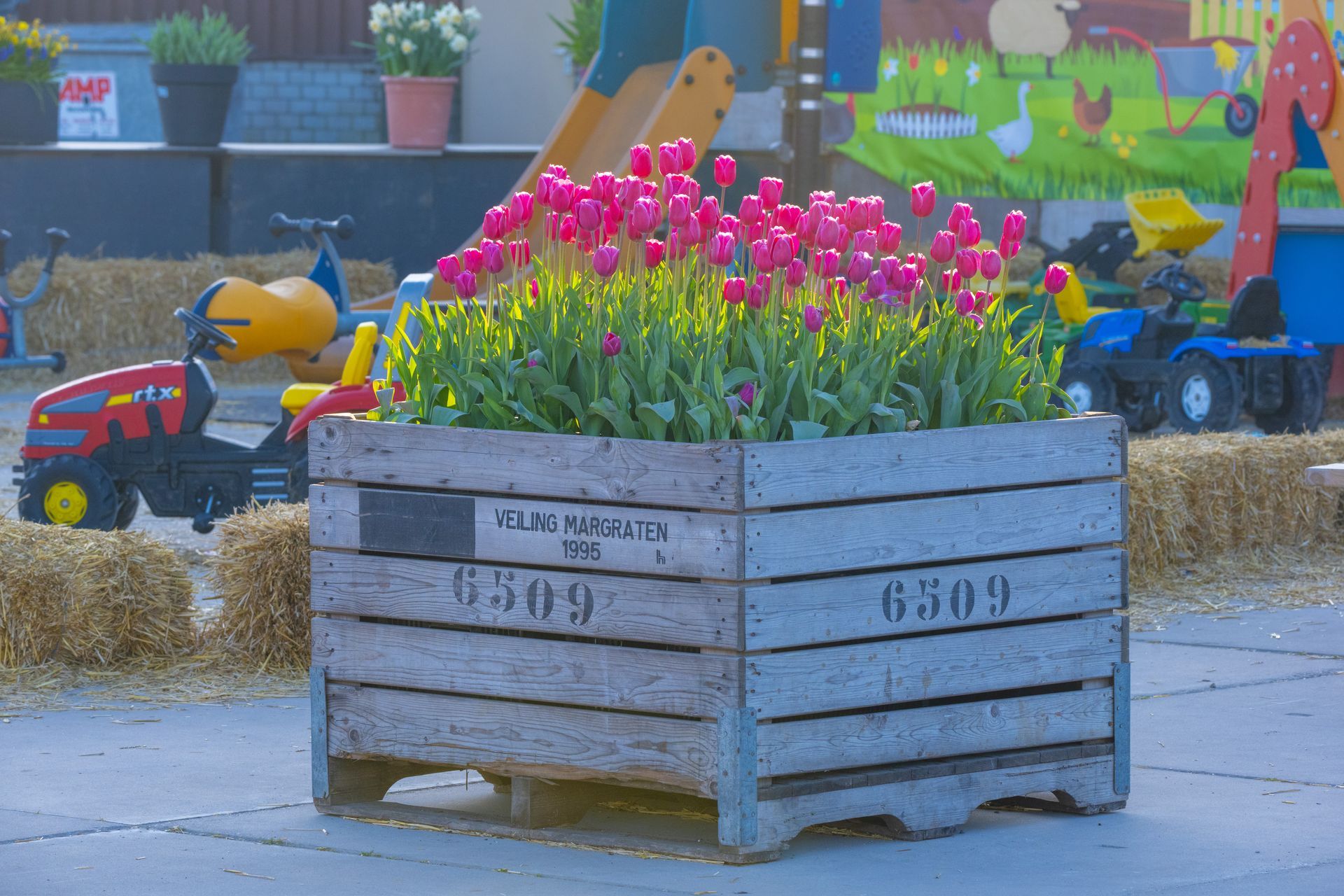
Tulips planted in different-sized pots and containers are one of the easiest ways to brighten up your farm’s spaces. Picture them lining your entrance, clustered around your farm shop, or scattered across a terrace or parking lot. These bursts of color create a warm, cheerful welcome for guests the moment they arrive—and instantly make your festival feel even more inviting.


A Souvenir That Blooms Again

Beyond décor, potted tulips make a thoughtful (and profitable!) souvenir. Visitors love the chance to take home a little piece of the festival, and pots make it simple for them to enjoy spring blooms right on their own doorstep. It’s a memory of their visit that keeps growing—literally.


A Little Extra Effort, a Lot of Extra Charm

It doesn’t take much. Just a few extra minutes this fall to tuck bulbs into containers, and you’ll reap the rewards come festival time. The result? More color. More charm. More delighted visitors who can’t help but share photos and stories of their beautiful spring day on the farm.


So while you’re planting fields of tulips this November, set some aside for pots, too. It’s a small step now that can bloom into something truly special later.


Want to dive deeper into the world of tulips and flowers? Check out our friends at Ruigrok Flower Bulbs for inspiration and ideas that will keep your farm in full bloom!

RECENT ARTICLES
By Christine Hawks May 22, 2026
 In recognition of May as Mental Health Awareness Month, we have launched a new web page to encourage community connection and support those needing mental health tools and resources. You'll find a curated collection of online inspiration and resources for navigating the stress of owning and managing a farm, developing a work-life balance and encouraging everyday mindfulness. The resources featured here are accessible and available to all regardless of membership with NAFDMA as part of our PAUSE initiative. Emphasizing your mental health and wellness, PAUSE stands for: Priority, Awareness, Unplug, Support and Exhale. NAFDMA debuted its PAUSE initiative at the 2026 Agritourism Convention and Expo with the PAUSE Wellness Lounge - an intentional space to rest and recharge during the Convention.
By angie May 8, 2026
May is Mental Health Awareness Month—a time to bring conversations about mental health out into the open. For those in agriculture, these conversations are more important than ever. Farming is more than a job—it’s a lifestyle, a legacy, and often a calling. But behind the early mornings, long days, and deep connection to the land, there’s a reality we don’t always talk about: farm stress is real, and it’s rising. The Reality: Mental Health in Agriculture Farmers and agricultural workers face unique pressures that can take a serious toll on mental health: Financial uncertainty and fluctuating markets Weather dependency and climate stress Long hours with little time off Physical isolation and limited access to care Generational expectations and legacy pressure And the data reflects this challenge: Farmers are 3.5 times more likely to die by suicide than the general population Suicide rates in rural America have risen sharply, increasing nearly twice as fast as urban areas Agriculture consistently ranks among the highest-risk occupations for suicide This isn’t just a statistic—it’s a reminder that many in our communities are carrying heavy, unseen burdens. Why It Matters for Agritourism & Farm Businesses Mental health doesn’t just affect individuals—it affects your entire operation. When stress goes unaddressed, it can impact: Decision-making and business growth Customer experience Family dynamics Employee well-being Just like your crops or livestock, your well-being needs care and attention to thrive. What Balance Can Look Like Here are a few realistic ways to support mental wellness on the farm: 1. Redefine “Balance” Balance doesn’t mean equal time—it means sustainable energy. Some seasons will demand more, and that’s okay. 2. Build Micro-Breaks Into Your Day Even 10 minutes to step away, hydrate, or reset can make a difference during peak seasons. 3. Stay Connected Isolation is one of the biggest risk factors in agriculture. Make intentional time to connect with anyone who brings you peace and joy. 4. Normalize the Conversation Talking about stress doesn’t make you weak—it makes you human. The more we talk, the more we reduce stigma. Resources for Farmers & Rural Communities If you or someone you know is struggling, help is available—and it’s designed specifically for agricultural communities: Farm State of Mind (American Farm Bureau Federation) Farm and Ranch Stress Assistance Network (FRSAN) National Suicide & Crisis Lifeline (Dial 988 in the U.S.) Local extension offices Rural health programs USA and Canada Many of these programs recognize that farmers face unique, industry-specific stressors and offer support tailored to that reality. A Final Thought Mental health is just as important as physical safety on the farm. This May, during Mental Health Awareness Month, consider this your reminder: Check in with yourself Check in with your neighbors And know that you’re not alone Because behind every successful farm is a person—and that person matters most.