
Pura Vida & Farm-Powered Inspiration: Highlights from the 2026 Costa Rica Agritourism Tour
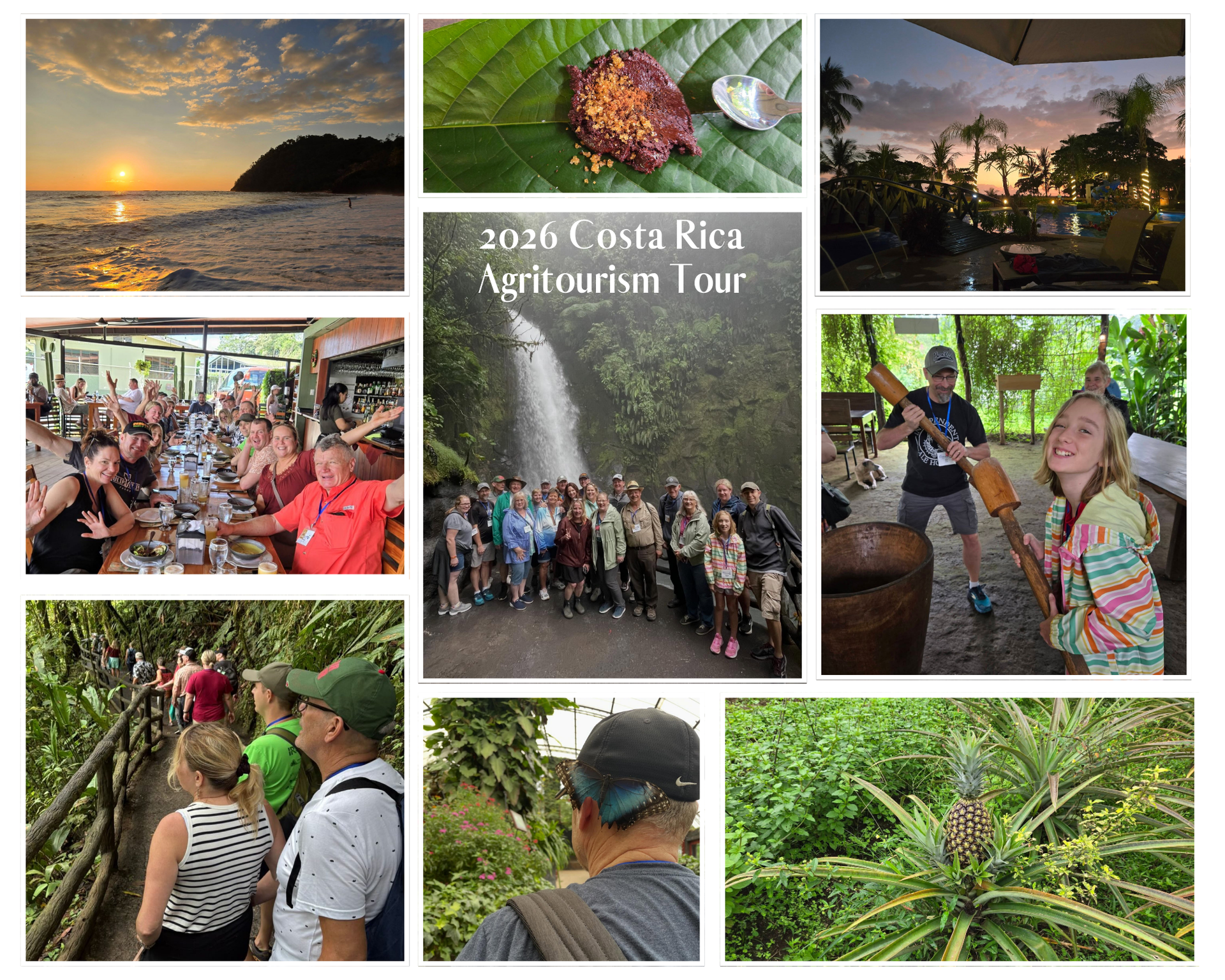
There’s something magical about discovering agritourism in a new landscape — where lush rainforests meet rich farmland, and local traditions blend with innovative visitor-ready experiences. That’s exactly what happened when NAFDMA members and friends embarked on our Costa Rica Agritourism Tour, January 2–8, 2026. This immersive journey combined agricultural exploration, cultural insights, and plenty of opportunities to connect with fellow agritourism professionals.
A Trip Rooted in Learning, Adventure & Connection
This tour wasn’t just a vacation — it was a chance to see how agritourism thrives beyond North America. From coffee estates tucked into misty mountains to wildlife-rich estuaries on the Pacific Coast, every day offered something new to inform, inspire, and invigorate our agritourism minds.
Day by Day: Inspiration Across Costa Rica
Day One — Welcome to San José
After arriving in San José, attendees checked in and enjoyed an afternoon of leisure — the perfect welcome to Costa Rican warmth and rhythm.
Day Two — Hacienda Doka Coffee Farm & La Paz Waterfall Gardens
Our first full day began at Hacienda Doka, where we traced coffee from seed to cup, stepped inside the oldest wet mill in Costa Rica, and savored local coffee and chocolates — an unforgettable look at agricultural heritage meeting agritourism. From there, we wandered through the La Paz Waterfall Gardens, home to hummingbirds, butterflies, and cascading tropical waterfalls.
Day Three — Arenal Hanging Bridges & Thermal Retreat
Exploring the Arenal Hanging Bridges brought us up close with rainforest wildlife — over 50 bird species, lush flora, and the vibrant pulse of nature. Later, we relaxed in the mineral-rich EcoTermales Hot Springs, capturing the restorative side of Costa Rican ecosystems.
Day Four — A Leisure Day in Arenal
With a day to unwind, tour participants picked their own adventure — from strolling La Fortuna town ziplining, or touring a local cacao farm and making our own chocolate! Sometimes, inspiration comes from simply observing local life at your own pace.
Day Five — Mangroves, Crocs & Coastal Biodiversity
As we moved toward Jaco, the Tarcoles River estuary showcased one of the country’s richest ecological treasures — mangroves teeming with birds like kingfishers and herons, and the famous American crocodile. Our boat ride through this biodiverse ecosystem was a highlight of wildlife watching and conservation learning.
Day Six — Jaco Beach & Leisure
A full day on the Pacific Coast offered sun, surf, and inspiration. You could stroll along renowned Jaco Beach, take an ATV ride through the rainforest, or see monkeys up close on a river boat ride, or simply soak in the relaxed beach culture that makes destinations memorable.
Day Seven — Farewell, Pura Vida!
With hearts full and minds buzzing with ideas, the group headed back to San José for flights home — wrapping up a trip that reaffirmed what agritourism is all about: place, people, and purpose.
Why This Tour Mattered
This isn’t just a travel story — it’s a series of real lessons that agritourism operators can carry home:
- Seeing agriculture through a tourism lens — from coffee culture to mangrove ecosystems.
- Local experience meets global insight — discovering how destination experiences can be shaped by culture, community, and environment.
- Connections made along the way — conversations on buses, shared meals, and evenings watching sunsets together created friendships that will outlast the itinerary.
What’s Next?
Whether you were on this tour or simply dreaming about joining next time, keep your calendar open for upcoming NAFDMA experiences that blend education, exploration, and connection. Check out our events lineup — including the Agritourism Convention & Expo and other immersive learning opportunities — and find your next chance to grow, together.
Thank You
A big thanks to every person who joined this journey — for bringing your curiosity, camaraderie, and passion for agritourism. It’s these shared experiences that help our industry flourish across borders and ecosystems alike.
RECENT ARTICLES