
Stepping Onto the Plant Bus with Renata: Cultivating Joy, One Mile at a Time. A Q&A with Renata of Renata’s Garden
Welcome to Renata’s Garden — Where Plants Cultivate Peace and Connection
If you’ve ever felt a sense of calm while tending a plant or joy at seeing a flower bloom, then you’ve already experienced a glimpse of what Renata’s Garden is all about. Founded with a deep-rooted belief in the healing and unifying power of plants, Renata’s Garden is more than a garden—it’s a mission to make nature accessible and meaningful to everyone, no matter where they are.
Through hands-on experiences, thoughtful education, and a passion for horticulture, Renata’s Garden is on a journey to inspire personal peace, foster vibrant community connections, and spark a lifelong love of learning—all through the beauty and simplicity of plants. Grab a cup of coffee or tea and join us for a Q&A with Renata about her vision and passion for Renata's Plant Bus.
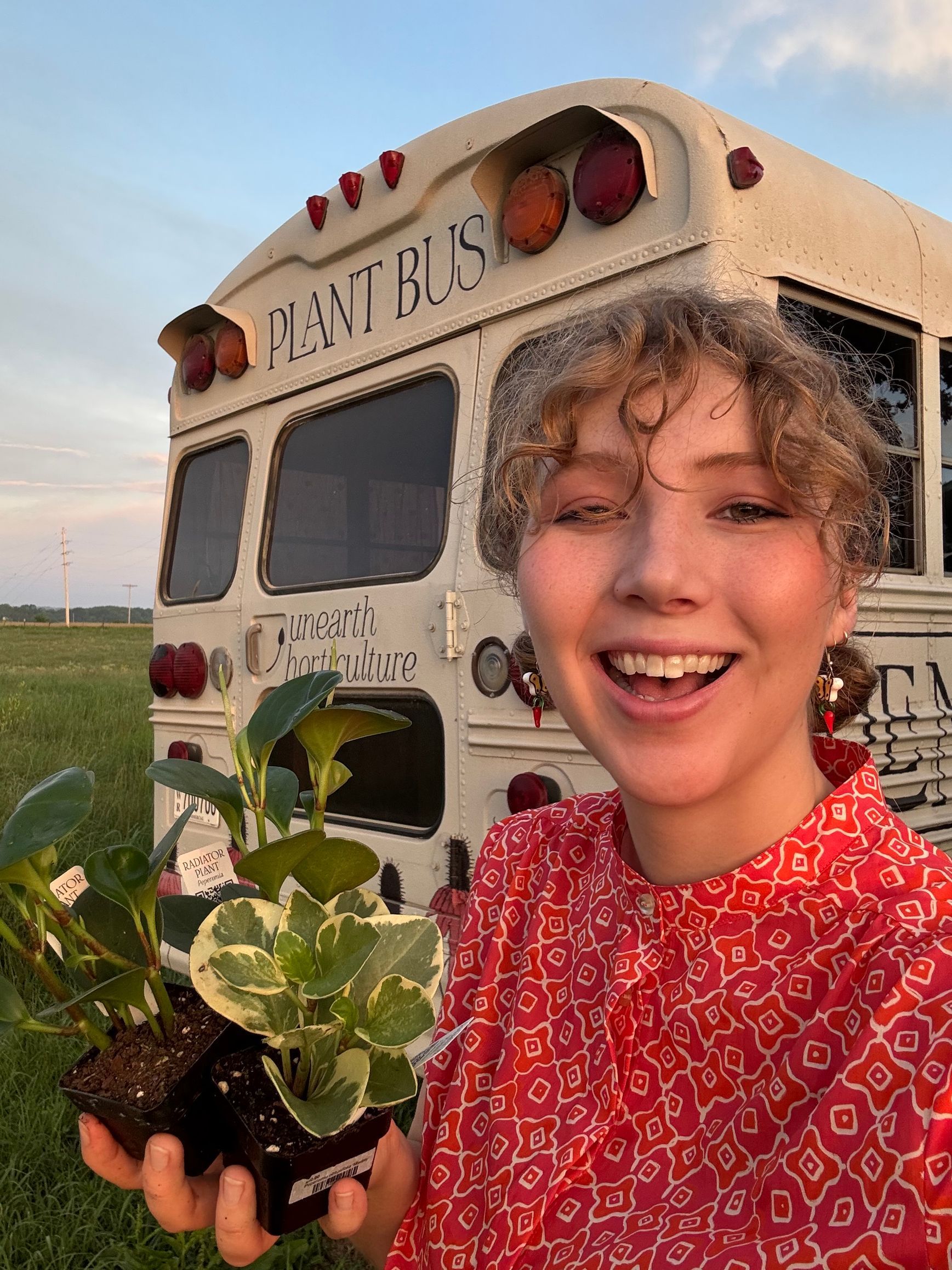
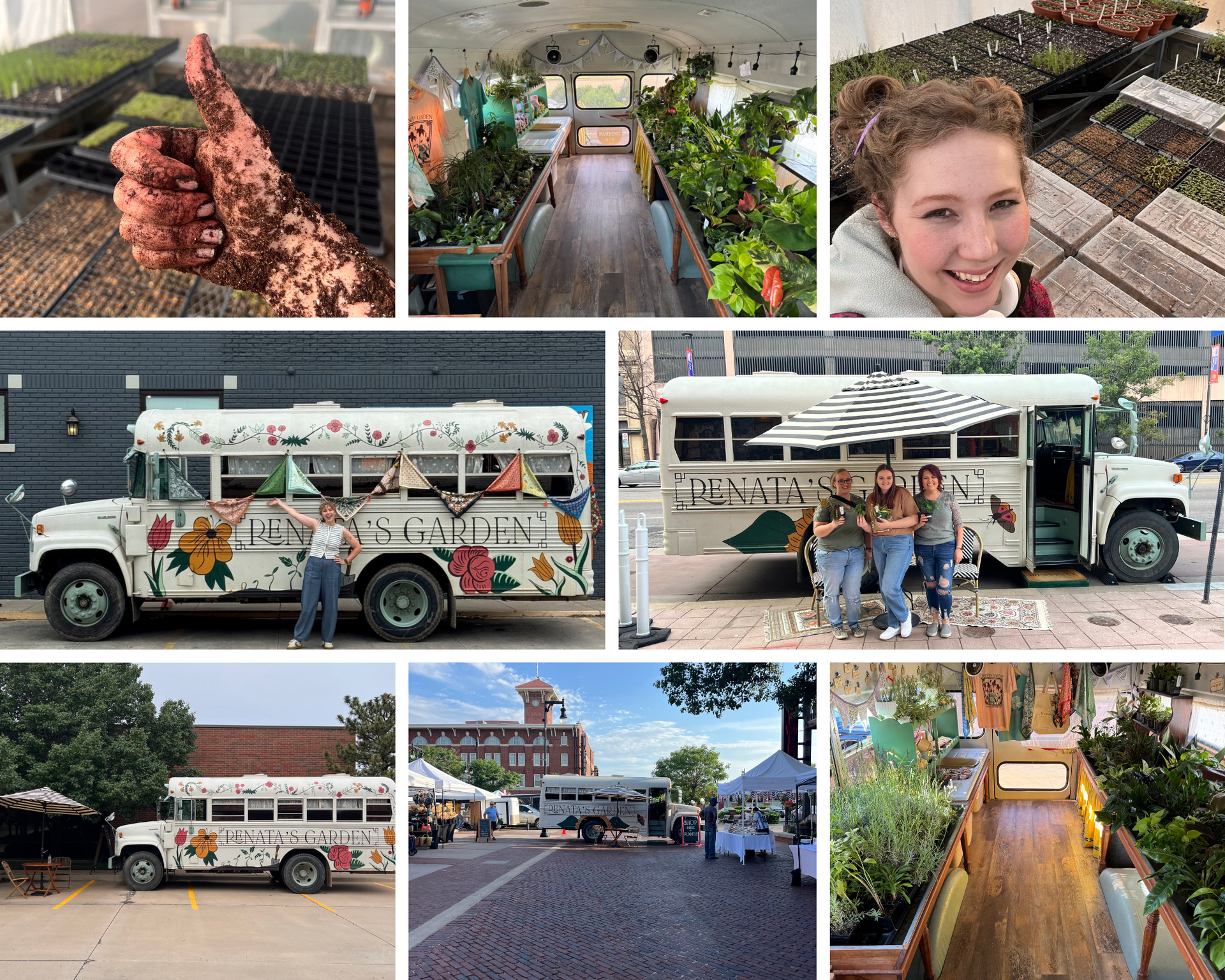
Let’s start with the star of the show—The Plant Bus! What sparked the idea to turn a bus into a rolling garden experience?
I was an avid 4-H’er from the first moment I was old enough to participate. By the time I was in junior high, I was hooked on judging teams, particularly horticulture judging and FACS judging (family and consumer sciences). Our local extension agents doubled as judging team coaches, giving me ample time on the road enroute to judging events and practices to pick their brains. Both agents had an irrefutable impact on my future. My horticulture agent helped me to see that a career in horticulture was possible, and my FACS agent showed me creative business models in our area that were geared towards supporting rural and hard-to-reach areas. Thus, the two concepts of a career in horticulture and a unique business model that could create community impact joined together and never left my brain. The first time I experienced a
skoolie renovation was a hot afternoon in El Dorado, Kansas, with my FACS agent. A local non-profit was feeding kids over the summer who would normally receive nourishment from their school district lunch program. And get this! They were operating out of a tricked-out skoolie! Complete with dinettes, the bus was a place for kids who lived in food deserts. That little idea tucked itself away in the back of my brain, because at the time, I had no plan to return to small business ownership after college.
Was there a moment when you thought, “Yes, this is what I’m meant to do”—bringing the garden to people instead of waiting for them to come to you?
As I became more educated and experienced in the horticulture industry at large—locally, nationally & internationally—a common problem became more clear and a vision was sparked. Horticulture was becoming more and more commercial, and I knew that I could not function in that world long-term. Large greenhouse operations were losing touch with their customers, and customers were losing touch with horticulture. Rural and inner-urban areas were becoming more isolated; misinformation about horticulture was starting to spread in the next generation of gardeners; and the world needed a reinvigorated hobby that could create a little joy. By the time I started my senior year in college, I knew that a mobile garden shop was in my future so that I could exist in between worlds—the big company and the small-time gardener — educating and breathing new life into the oldest hobby, gardening. While I’m not taking food to hard-to-reach areas, I am supplying a need and a skillset.
What was the process like renovating and transforming the bus? Did you run into any surprises or creative challenges along the way?
Every step of the Plant Bus renovation was a problem in search of a solution. I am not kidding. It worked out though because I’m addicted to problem solving, so it was right up my alley!
Your bus is so much more than a vehicle—it’s a mobile experience. What do you hope people feel when they step onto it for the first time?
I want to inspire people from all walks of life and generations to give gardening a go. The feeling of awe and imagination that my business creates for visitors can inspire confidence in those who may have been intimidated by horticulture in the past. My aim is to make success in the garden attainable for everyone.
How does your personal story and background in gardening shape the mission behind Renata’s Garden?
The youth education I received in horticulture, specifically from 4-H, impacted my life tremendously in all sorts of ways. My journey to a career in horticulture started when I was nine and I accidentally landed myself on our county horticulture judging team. I happened to be bored one afternoon at the county fair, and my dad made me participate in the contest. You should have seen my face at the Wednesday night livestock auction when they announced I was one of the contest winners. It was a big laugh to my family at the time, but it spurred me on to where I am today. I was so impacted by seemingly menial experiences in my childhood. The knowledge that small experiences can create the biggest impacts in someone’s life, influences how I create experiences for each visitor to the Plant Bus.
You’ve said you’re passionate about community, connection, and nature. How do those values influence the way you run your business?
Because I grew up in the Flint Hills prairie, I have a deep respect for the land and for agriculture. As such, sustainability is at the forefront of my practices. I am a detail-oriented gal, and at the end of the day, it makes me feel amazing to know that I don’t waste many resources, whether that’s time, space or materials. Through my business, I also aim to connect humankind with the land in which we live and farm. An educated consumer makes for a less wasteful consumer.
How do you decide where the Plant Bus will go next? Are there any locations or types of events that feel especially meaningful to you?
I travel within a 60-mile bubble in South Central Kansas and try to find local small businesses that the Plant Bus’s presence can complement. I am usually partial to businesses whose missions and values overlap with mine, creating joy for customers. However, my favorite stops are in locations where a community is lacking access to a local garden center or where a large proportion of the community might not even think to go to a garden center.
What role do education and inspiration play in your work? What do you hope people learn or take away after meeting you or visiting the bus?
I want to empower others to be life-long learners, instilling curiosity in an unexpected way. Because of the element of surprise created by my business, it provides a great amount of happiness for visitors. I hope that never changes.
Your Facebook and website reflect a deep appreciation for beauty and growth. Where do you find your inspiration for plant displays, workshops, and seasonal offerings?
All of my creativity and inspiration behind my business comes from my life experience whether that’s a book or a podcast, a friend or a customer, a childhood lesson or a recent lesson. I just hope what I enjoy and imagine, other people will like too.
What's one of the most memorable or heartwarming reactions you’ve received from a visitor to the Plant Bus?
I can’t pick just one. The impact that I see in young minds is always a heartwarming experience for me. Once a kid hops on board, they see the world differently, and in an excellent way. The bus provides scope for the imagination.
What advice would you give to someone dreaming up a creative agritourism project of their own?
Dreaming is one thing. Actually doing the project, start to finish, and then powering it forward into the future is another thing entirely. Buckle up. The best projects take you along for the ride.
And finally—what’s next for Renata’s Garden? Any dreams, plans, or plant-powered adventures on the horizon that you can share with us?
Without a doubt, I have many projects on the horizon. I would tell you what they are, but I feel like when I share my plans publicly, it limits me. You’ll just have to wait and see!
RECENT ARTICLES