
The Throne Room: How Stuckey Farm Built Bathroom Trailers Worth Talking About
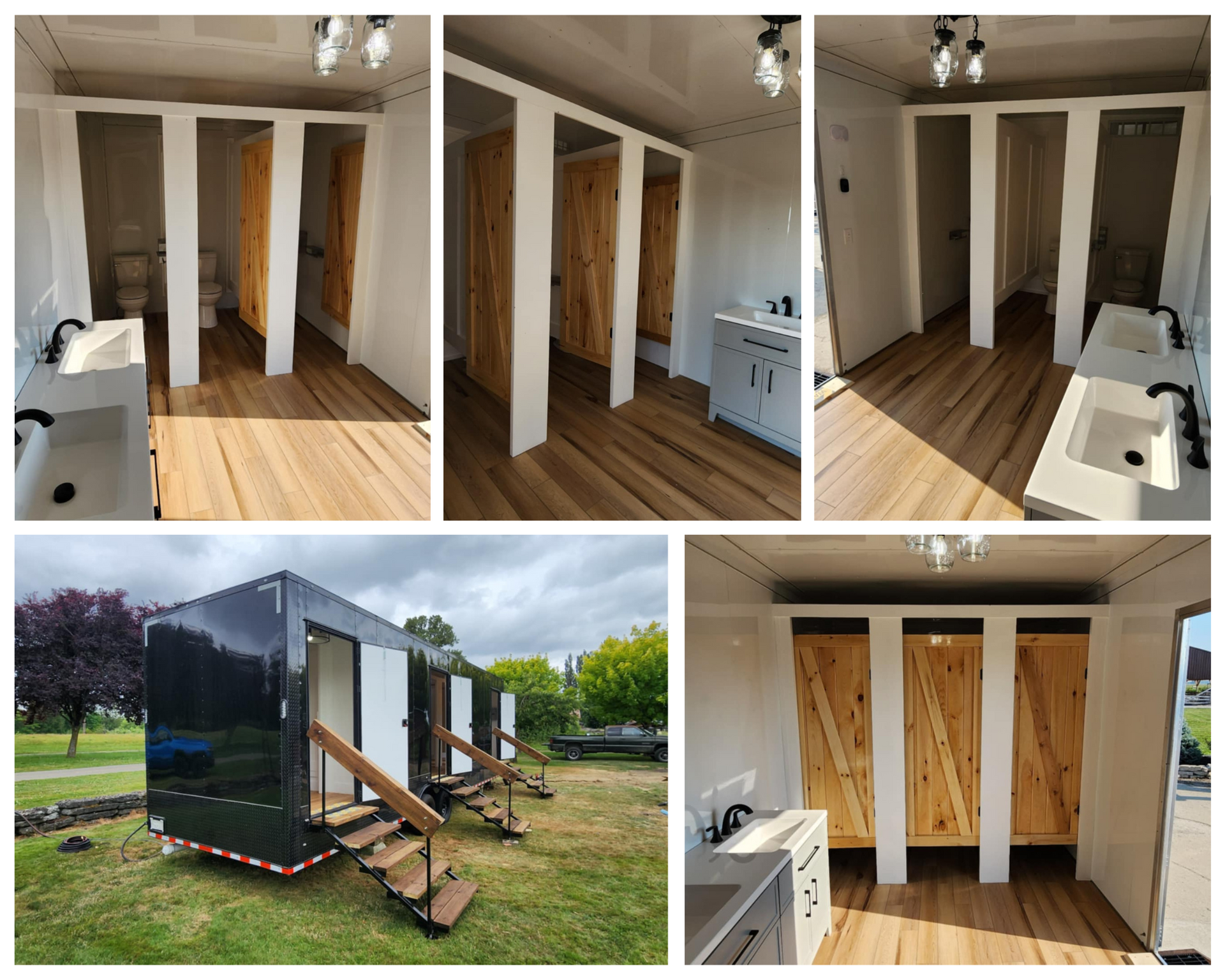
When guests rave about your… bathrooms, you know you’re onto something. At Stuckey Farm, what started as one dad’s firm “no” to porta-potties has grown into Agritourism Solutions—a build shop that designs and customizes luxury bathroom trailers purpose-built for farms. We caught up with Jordan Pierce to talk origin story, design choices, build timelines, guest reactions, and what’s next.
“My dad said, ‘Build me a bathroom trailer—and make it nice enough that guests leave surprised they just had a great bathroom experience… on a farm.’” — Jordan Pierce
Origin Story & Inspiration
What inspired you to build bathroom trailers on the farm?
Like many farms, we felt stuck with porta-potties—and my dad hated them. One day he came to me and said, “Build me a bathroom trailer and make it nice so guests are pleasantly surprised they had a good bathroom experience at a farm.” That was the spark.
Any unusual inspirations that shaped the concept?
Our family has some background in remodeling and house flipping, so we asked, what would a bathroom feel like if it were in your home? That residential mindset drives our choices.
Design & Functionality
Walk us through the designs.
We currently offer
three base layouts for 32' trailers and
two for 18', and then we customize from there. Recently we built a trailer with
8 women’s stalls and
2 men’s stalls plus a
removable wall so it can convert to women-only in the future. Beyond layout, clients chose
flooring, light fixtures, vanities, sink styles, and colors—down to the details. These are truly built to order.
Standard features you won’t compromise on?
All trailers are
fully insulated with
luxury vinyl plank flooring, and we spec
extended tongues (so if someone jackknifes the trailer, they won’t slam into the fresh corner you just paid for). We only use high-quality materials. These are
luxury bathroom trailers—we want buyers to feel a touch of the same luxury their guests will feel.
How do you decide on finishes—lighting, sinks, stalls?
We sit down with each farm and pick everything together so the trailer matches their brand. Exterior colors can be customized too—and if nothing fits,
we can vinyl wrap the trailer.
These are basically made to exact order for other farms.
Building & Logistics
What does the build process look like—from concept to completion?
Once the deposit lands, it’s about
9 weeks for the shell and
3 weeks for our interior build-out.
Any challenges—weather, budget, permitting, technical issues?
Our workshop fits
two 32-footers side-by-side, so weather’s not a problem. Permitting hasn’t been an issue because the units are
portable.
How long did the very first build take—and how about now?
Our first farm trailer took about
5 weeks to finish out. Now that we’ve got our rhythm, it’s about
3 weeks to complete interiors once the shell arrives.
Function & Farm Fit
How do the trailers change the flow at events?
Porta-potties can feel like a “negative” guests tolerate. With our trailers, people come out
smiling—and talking about how nice the bathroom was. Five years ago I wouldn’t have believed I’d hear guests discussing bathrooms at Stuckey Farm… yet here we are.
Permanent or mobile?
Best case, you tie into an existing septic field. But there are options: we can pump into fertilizer tanks that your septic service empties, and we can build onboard tanks when needed.
Capacity & maintenance?
An optimized
32' trailer with
8 women’s stalls, 3 urinals, and 1 men’s stall can comfortably move
~6,500 people in a weekend with little to no wait. Maintenance is surprisingly light—sweep occasionally, restock TP. Because the space feels upscale, guests tend to
keep it clean. We also include
toiletry containers to cut down on clogs.
Guest Experience & Reactions
What are you hearing from guests and staff?
Our staff bathrooms are permanent… and staff still
choose the trailer. Guests tell friends in line they have to “go in there and try it.”
Any surprises?
We overbuild and
oversize the plumbing, and maintenance has stayed
much lower than expected.
Design Philosophy & Vision
What principles guide your design?
Luxury. A luxury buying experience for the farm and a luxury using experience for the guest. We want to help farms
elevate the standard and finally say goodbye to the—pardon me—“green plastic poop saunas.”
How do you want guests to feel inside?
As
close to home as possible. Going to the bathroom away from home is vulnerable; we design to reduce that discomfort.
Does this align with your broader brand?
Yes—my dad and I built out a larger offering called
Agritourism Solutions to provide practical, guest-experience-forward solutions for farms.
We want to help farms elevate their guest experience and set a new standard for bathrooms on farms.
Special Features & Stories
Any special touches to highlight?
Lots.
Every door and divider are hand-built, and most elements are custom. The craftsmanship is a point of pride.
Memorable build moments?
We run a tight ship in the shop—fun happens out on the farm. Check our
Facebook for the lighter side.
Future Plans & Reflections
What’s next on the product roadmap?
We’re designing
three modular trailers:
- Baby-changing / nursing-mom trailer
- Mobile office
- Bride or groom getting-ready suite
What did you learn that you’ll carry forward?
Every trailer sparks new ideas. I wish I could turn my brain off, but I'm always coming up with better ways to do things and new features to add.
What’s next for Stuckey Farm itself?
We’ll
refine existing offerings and keep improving.
Practical Advice for Other Farms
Advice for farms considering something similar?
Even if you’re staying with porta-potties,
mitigate the experience—dress them up, increase cleaning on busy weekends. But if you get a
bathroom trailer, there’s
no going back—your guests will thank you.
Anything you wish you’d known earlier?
Rental demand. Off-season rentals can generate real revenue. I talked with a farm that rented a bathroom trailer for
two months for $30,000.
At-a-Glance Specs (example 32' build)
- Layouts: 3 base (fully customizable)
- Example capacity: 8 women’s stalls + 3 urinals + 1 men’s stall
- Throughput: ~6,500 guests/weekend with minimal waits
- Materials: Fully insulated; LVP flooring; high-quality fixtures
- Extras: Extended tongue; custom finishes; exterior color or vinyl wrap options
- Plumbing: Oversized lines; onsite tanks or tie-in; pump-to-tank options
Connect with Agritourism Solutions
Contact: Jordan Pierce
Phone: 317-371-4047
Email:
jordanpierce@stuckeyfarm.com
“When 20-year-old me joined Stuckey Farm, I never imagined I’d be talking luxury bathroom trailers—but here we are, and I’m loving it.” — Jordan
RECENT ARTICLES