
We’ve Got SPIRIT, Yes We Do. We’ve got SPIRIT, How ‘Bout You?
We’ve Got SPIRIT, Yes We Do.
We’ve got SPIRIT, How ‘Bout You?
How much do you know about your state traditions? How much do you know about your city traditions? How much do you know about your local town/region/district traditions? It is time to research your local area’s history and traditions and showcase them at your farm!
Knowing I was traveling to Oklahoma, I began researching where to stay, what to do, and what to eat. Come to find out, Oklahoma has a state meal! Say WHAT! I will say it again. Oklahoma has a state meal! This state meal, while making my tummy happy, had me thinking, how can we celebrate the traditions and history around us on our farms?
The Restaurant:
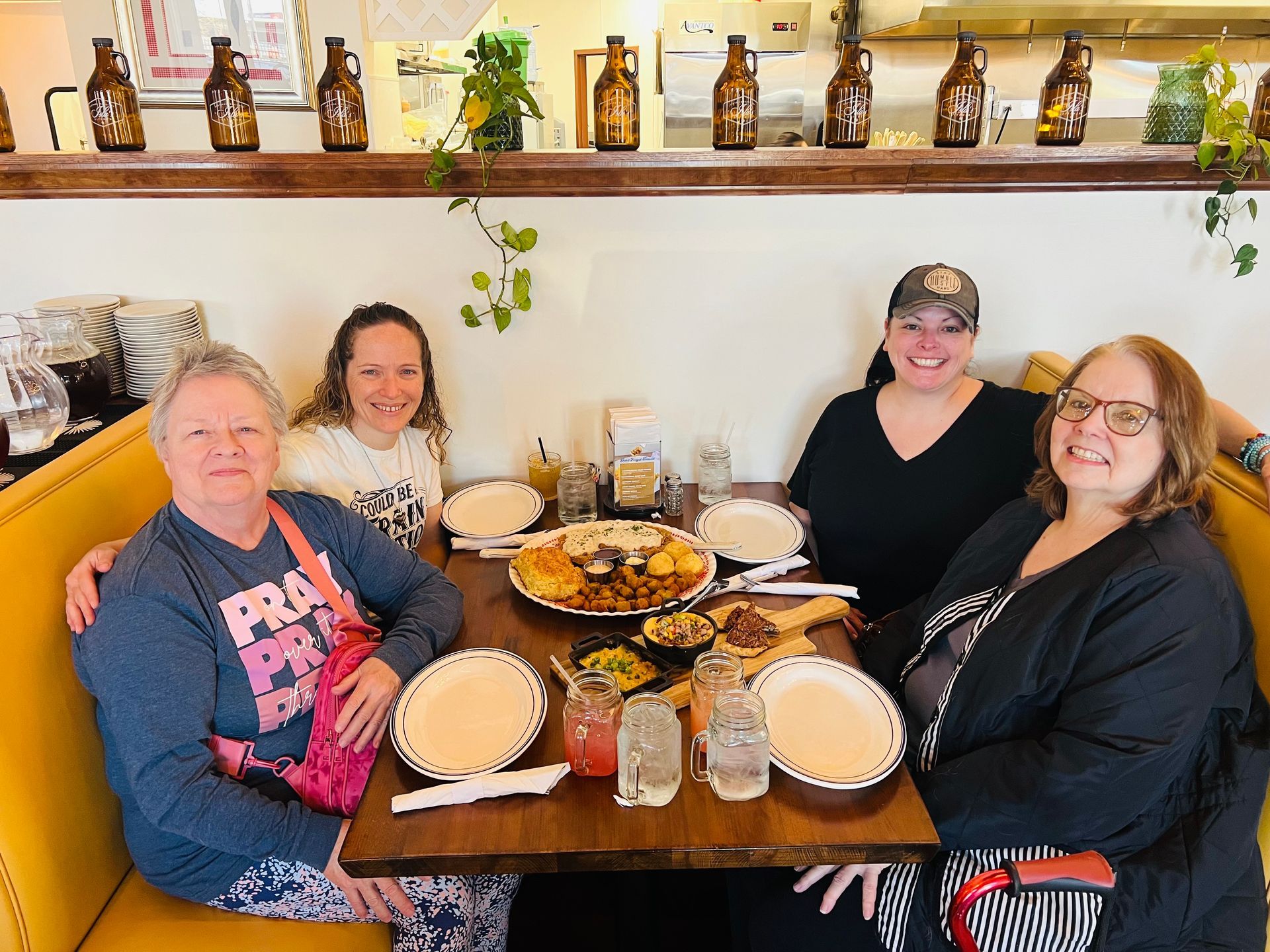
Isla's Kitchen located at 404 E Archer St in Tulsa, OK honors the history of the Oklahoma State meal.
Isla’s version of the State Meal from their Menu:
THE OKLAHOMA STATE MEAL
perfect for 2-3 people to share
Did you know that Oklahoma is the only state with a state meal?! We’ve taken all the ingredients on the state meal and made it our own. Two chicken fried steaks, sausage gravy, buttermilk biscuits with strawberry jam & honey butter, cornbread muffins, our famous squash casserole, fried okra, cheesy grits topped with BBQ pulled pork, black-eyed pea & corn succotash, and 2 slices of pecan pie!
Isla’s Okie Challenge — Ready for southern fame? If you, by yourself, can eat all of the above in 46 minutes (since Oklahoma is the 46th state), then it’s free, and you get bragging rights, a champion t-shirt and your picture taken with our pie wielding golden driller.
According to Oklahoma Historical Society,
Oklahoma's official state meal became one of the State Emblems by virtue of House Concurrent Resolution 1083, approved in 1988 by the Forty-first Legislature. The meal includes an extensive menu reflecting Oklahoma's cultural backgrounds and the state's historical and contemporary agriculture. Meats include barbecued pork, chicken-fried steak, and sausage with biscuits and gravy. Vegetables include fried okra and squash, grits, corn, and black-eyed peas. Breads include cornbread (and biscuits, as above). Dessert comprises strawberries and pecan pie. The types, variety, and sheer quantity of foods in the state meal (which can be divided into breakfast, lunch, and dinner) generally typify the traditional foodways of the South.
By the early 1800s corn and pork were dietary staples on the southern frontier and after two centuries remained an important part of that region's culinary repertoire. Corn and squash, originally American Indian dietary staples, were breaded with corn meal and fried in pork grease, southern-style. Cowpeas, which also may have an American Indian origin but are now considered African American "soul food," were boiled, usually with bacon or fatback. Corn was important, whether boiled on or off the cob, dried, shelled, and ground into corn meal for cornbread and breading, or dried as hominy and ground into grits (or as an ingredient in moonshine liquor). Okra may originally have been brought to the Western Hemisphere from Africa by seventeenth-century slaves, and it is popularly rolled in corn meal and fried. All of these items remain important in southern cookery, particularly in the upland South and in Texas where many of Oklahoma's nineteenth-century population originated.
Early-day southerners did not generally use wheat flour, but after 1900 milled flour became more available, and beaten biscuits became popular. The Oklahoma meal features them served with gravy, but there is no designation as to whether the gravy is the southern red-eye variety or the white, creamy concoction commonly served on chicken-fried steak.
Pork is also a southern staple, and barbecueing is also typical of the eastern South. In Oklahoma both pork and beef are barbecued, and the selection of pork as the barbecue for the state meal reflects southern, rather than Texas, foodways. While eaten less often in the South, beef was a dietary staple in Texas and Oklahoma. Chicken-fried steak combines a piece of well-pounded, seasoned Texas beef with the southern tradition of frying, rendering edible several otherwise tough cuts of meat. Texas cowhands may have brought this item and cooking method to Oklahoma, and it is now ubiquitous. The late-twentieth-century growth of Oklahoma's commercial hog industry is reflected in the presence of sausage in the state meal.
The meal finishes with a dessert of fruit and pie. Strawberries (the South's fifth-largest crop) and pecans are southern food items as well. They are produced in fairly large quantities in Oklahoma.
Most of the meal's constituents can be found in small restaurants and cafés throughout the state. Into the twenty-first century the official state meal continued to reflect the cultural orientation of many Oklahomans.
https://www.okhistory.org/publications/enc/entry?entry=ST023
The Question:
What can you showcase at your farm from the history surrounding you? It’s time to showcase your SPIRIT and creativity for your local area, the question is how will you make it happen?

RECENT ARTICLES